

Click any topic below to view related blog posts. You may also scroll to browse all posts.
Summer Planning Should Include More Than Training: Why Educational Leaders Must Build Wellness Into Organizational Culture
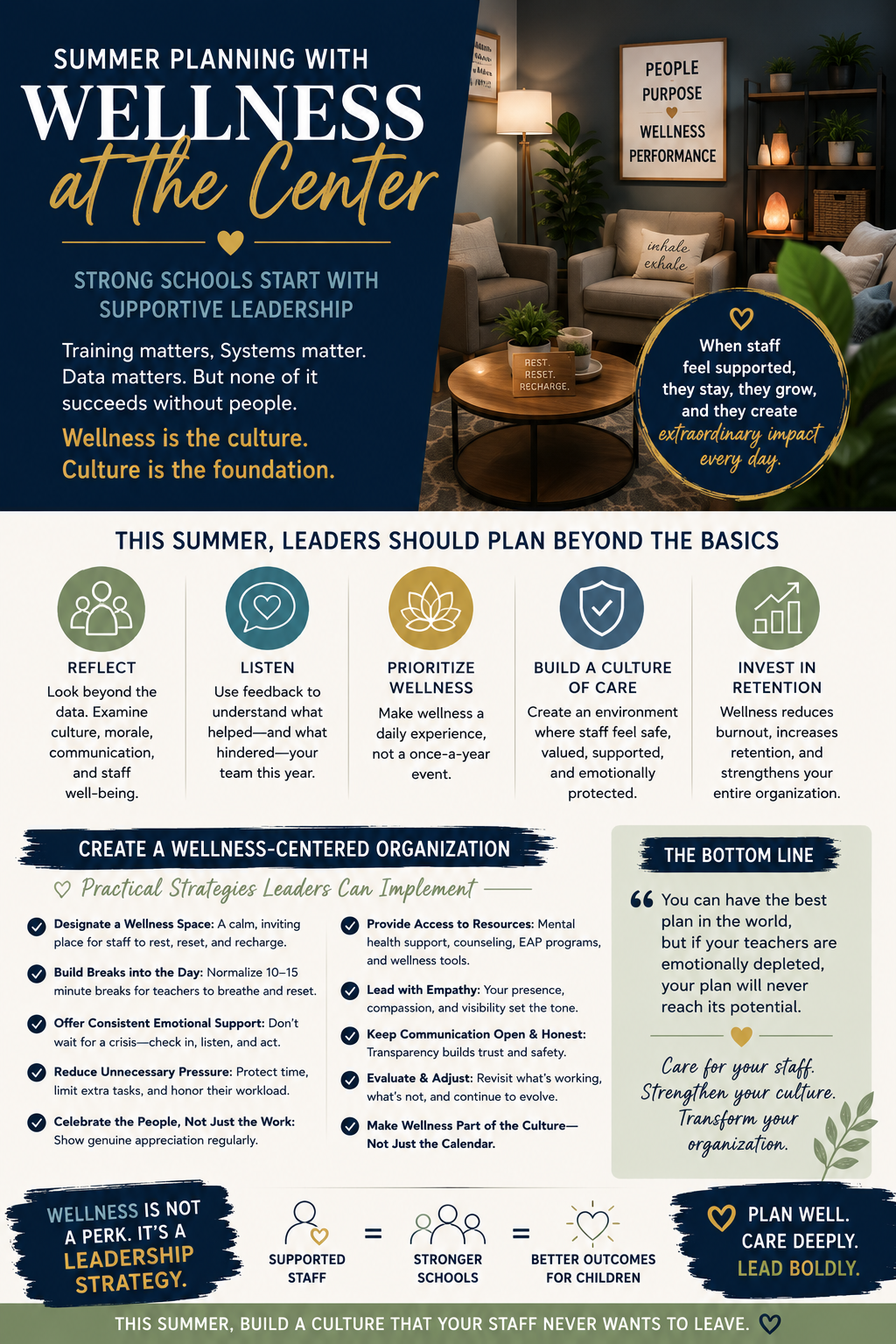
Summer planning should involve more than trainings, data reviews, and classroom preparation. Educational leaders must also reflect on staff morale, organizational culture, burnout, and the emotional well-being of the people carrying the organization every day. This blog explores why sustainable wellness systems, meaningful leadership support, and emotionally safe work environments are essential for stronger schools, healthier staff, and better outcomes for children.
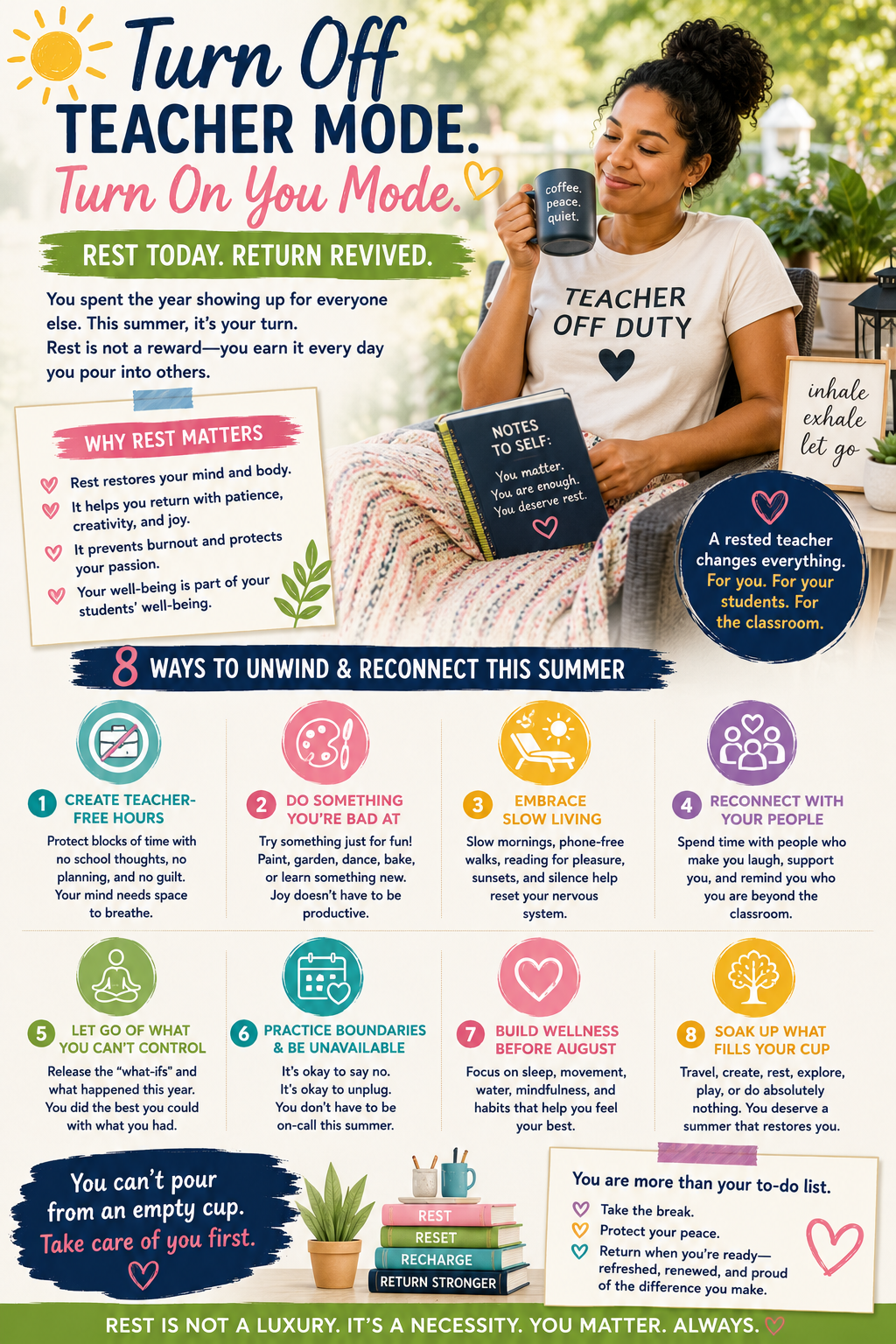
You Do Not Have to Earn Rest: Why Teachers Need to Recover During Summer Break
After a long and emotionally demanding school year, many teachers enter summer exhausted but still operating in “teacher mode.” This blog encourages educators to slow down, prioritize wellness, and intentionally recover during summer break so they can return refreshed, emotionally restored, and ready for a healthier new school year.
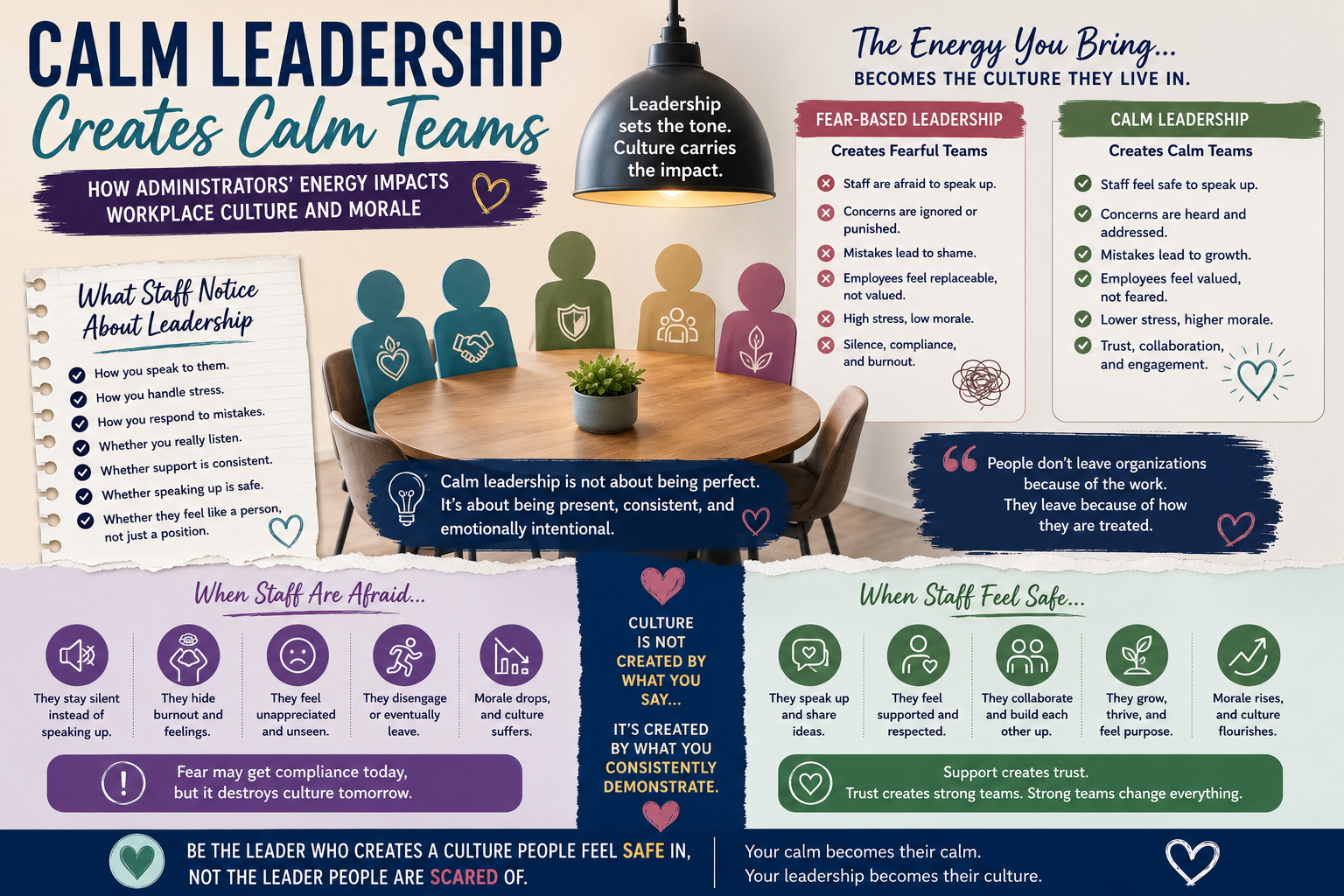
Calm Leadership Creates Calm Teams
The emotional energy of leadership shapes workplace culture far more than many organizations realize. In this reflective wellness and calm blog, we explore how fear-based leadership creates silence, burnout, anxiety, and emotional disconnection among staff, while calm, emotionally aware leadership builds trust, psychological safety, morale, and healthier workplace relationships that support both educators and children.
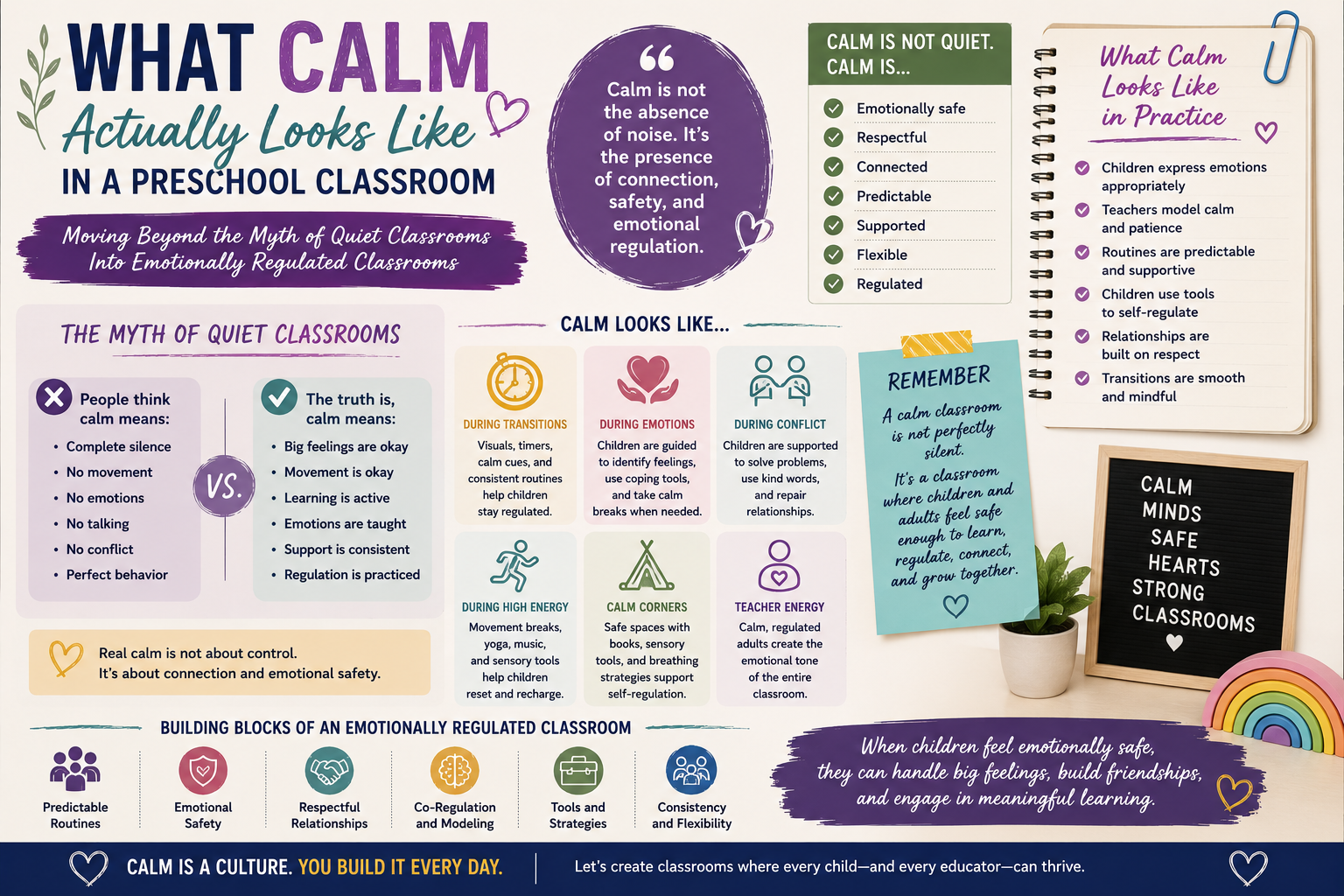
What Calm Actually Looks Like in a Preschool Classroom
Many people assume a calm preschool classroom means complete silence, but emotionally regulated classrooms look very different. In this reflective wellness and calm blog, we explore what calm actually looks like in early childhood environments through emotional safety, respectful communication, predictable routines, co-regulation, calm corners, and healthy teacher-child interactions that support emotional growth rather than control through silence.
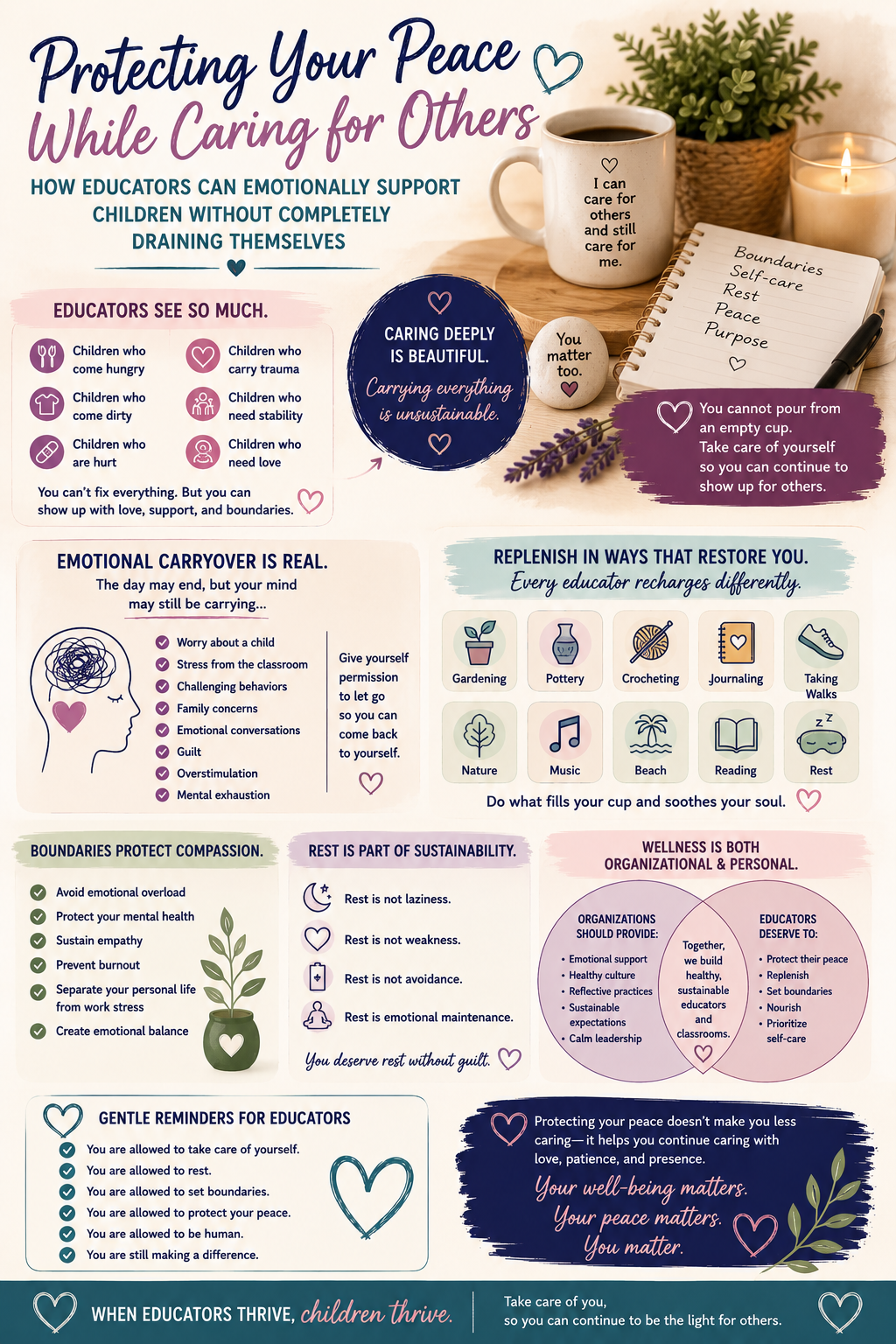
Protecting Your Peace While Caring for Others
Early childhood educators carry enormous emotional weight as they care for children experiencing trauma, neglect, behavioral challenges, unmet needs, and emotional stress. In this reflective wellness and calm blog, we explore how educators can continue supporting children compassionately while also protecting their own emotional well-being through boundaries, rest, self-care, emotional regulation, and sustainable wellness practices both inside and outside the classroom.
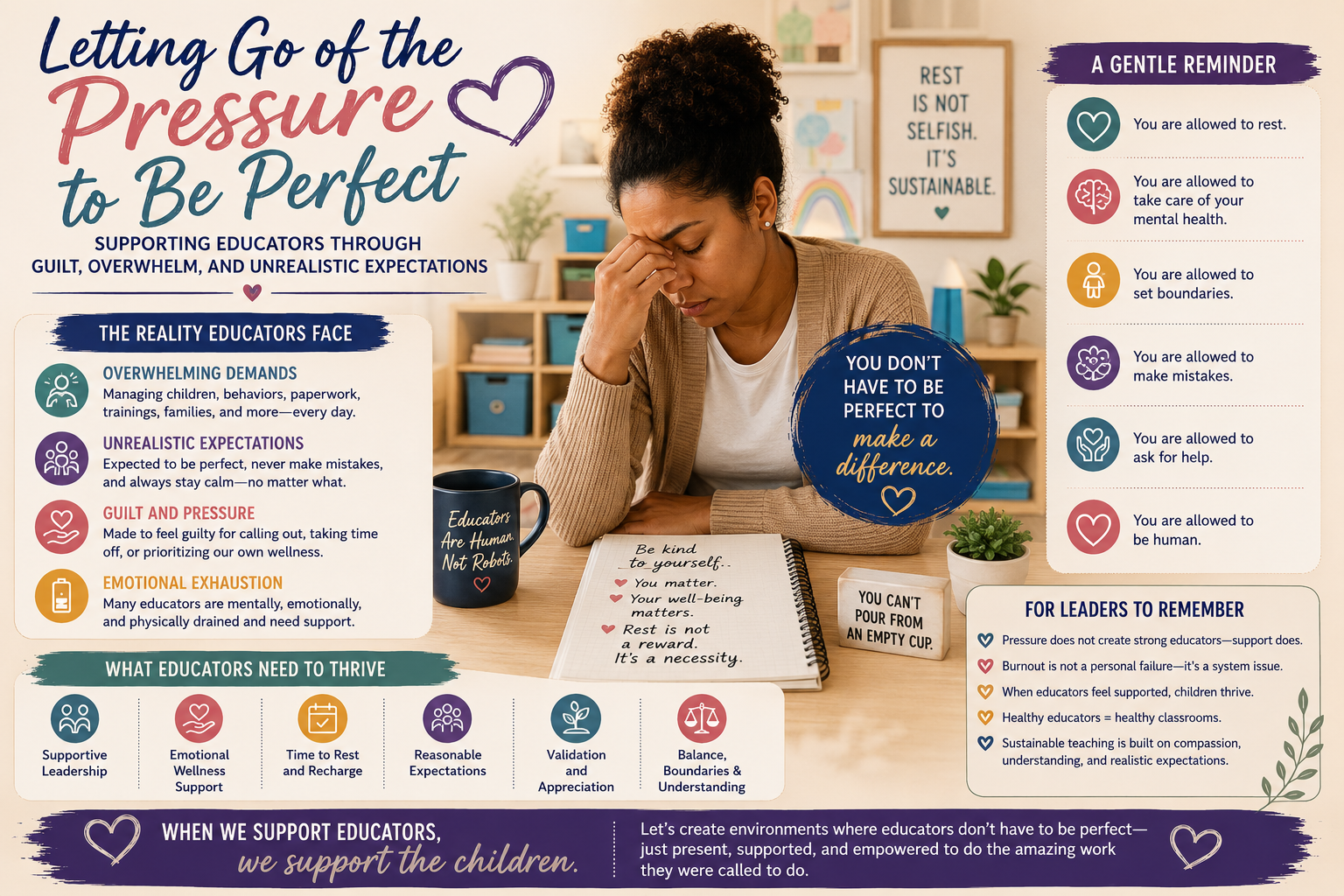
Letting Go of the Pressure to Be Perfect
Early childhood educators are often expected to carry overwhelming workloads, manage challenging behaviors, complete endless responsibilities, and maintain perfection under constant pressure, all while suppressing their own emotional exhaustion. In this reflective wellness and calm blog, we explore how guilt, unrealistic expectations, workplace pressure, and emotional overwhelm are impacting educators, and why sustainable leadership must create environments where teachers are supported as human beings, not treated like machines.
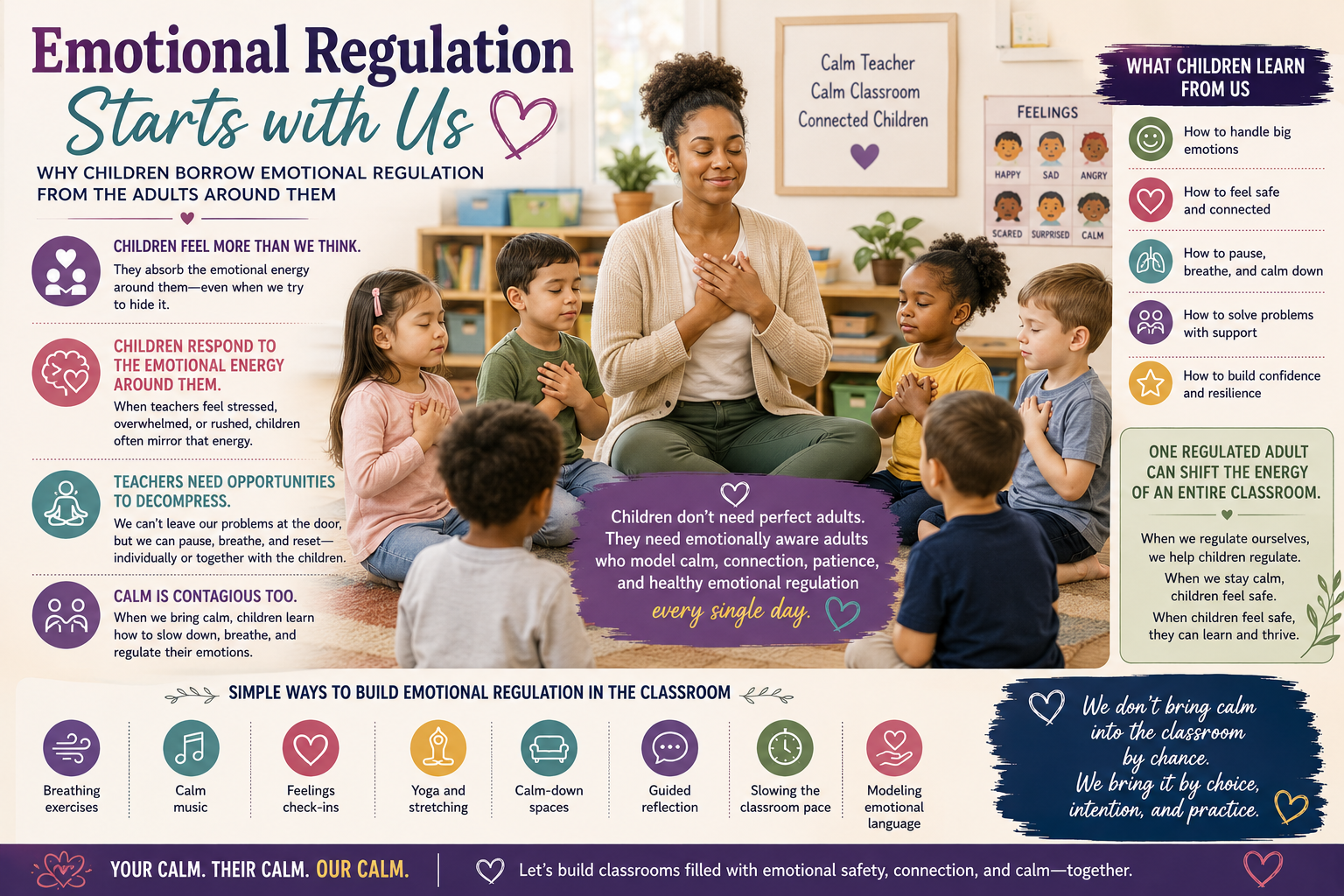
Emotional Regulation Starts with Us
Children learn emotional regulation not only through direct teaching, but through the emotional energy and responses of the adults around them every day. In this reflective wellness and calm blog, we explore how educators influence classroom emotional climate, why children often mirror adult stress and regulation patterns, and how intentional calm practices can help create emotionally safe, connected, and regulated preschool classrooms.
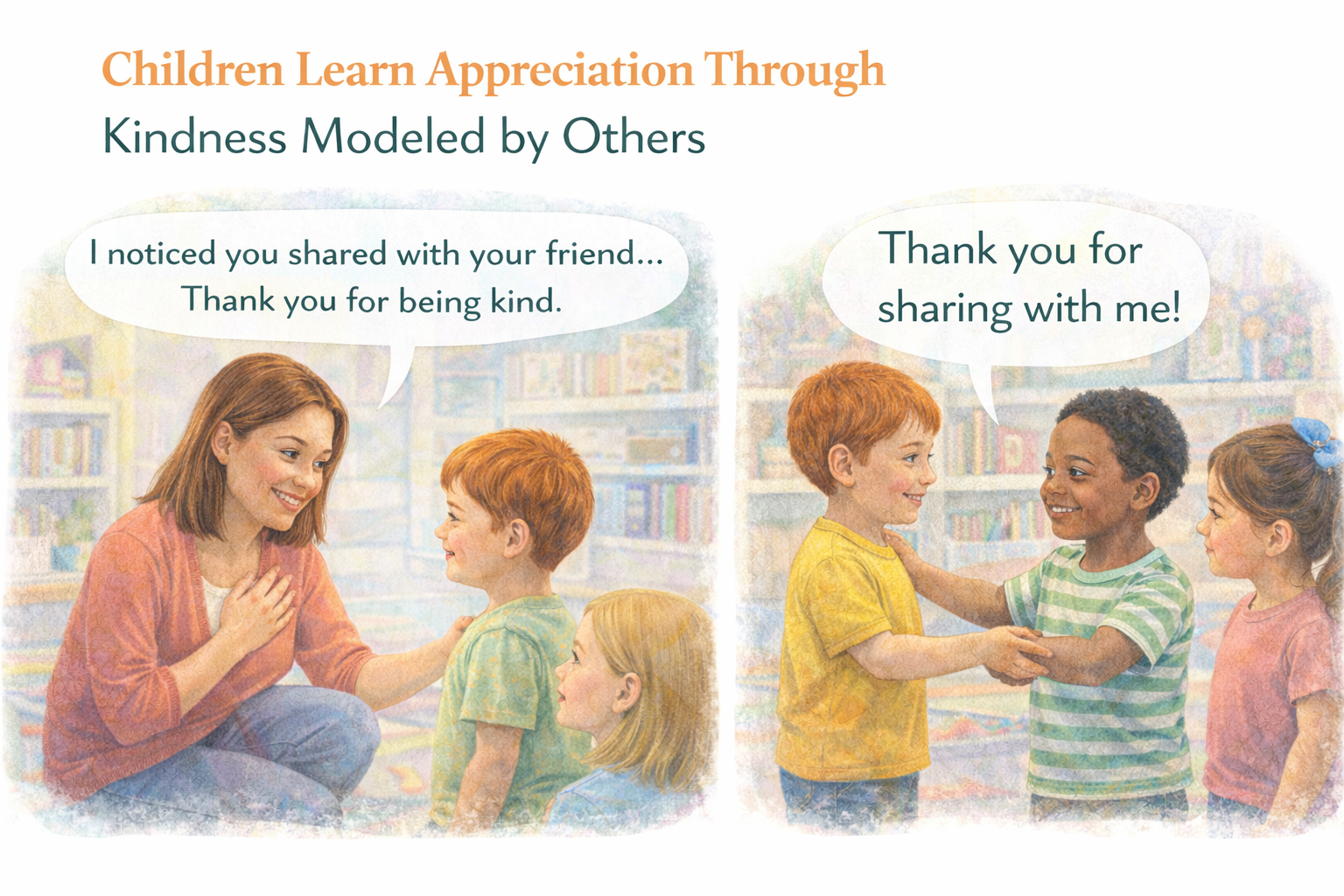
Encouraging Children to Express Appreciation
Young children feel kindness long before they know how to express it. When teachers intentionally model and name appreciation in everyday moments, children begin to develop the language of gratitude, connection, and friendship naturally within the classroom.
✨ From Wonder to Warmth: What Winter Looks Like in a Classroom That Includes Everyone
This season, we’re shifting winter learning away from holidays and into wonder, warmth, and inclusion. From global curiosity to sensory STEM and kindness rituals, these activities help every child feel seen, connected, and grounded, no matter what their family celebrates. A reflection on building classrooms where all traditions and experiences belong.
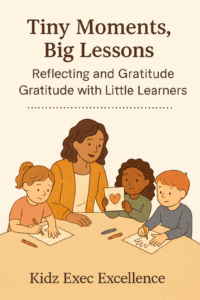
Tiny Moments, Big Lessons: Reflecting and Creating Gratitude with Little Learners
This week’s Kidz Exec Excellence blog explores how simple, heart-centered classroom moments, like reflection and gratitude, can strengthen emotional learning right before the break. Whether you’re still in session or already home, these strategies and crafts offer easy, impactful ways to connect with your little learners. SEL doesn’t require a big production, just your presence, a prompt, and a little paper heart.
Small Voices, Big Thanks: Why Gratitude Matters in Early Childhood
In early childhood, gratitude is more than polite manners,it’s a foundation for empathy, emotional resilience, and community connection. This blog explores why teaching young children to say “thank you” goes far beyond surface-level behavior. Through stories, routines, and reflection, educators and caregivers can help little learners internalize appreciation as a way of seeing the world. Learn how gratitude shapes brain development, supports regulation, and lays the groundwork for a life of relational strength and self-awareness.

Classroom Calm and Fall Transitions: Staying Grounded When Energy Runs High
Fall brings excitement, color, and change, but it can also bring classroom chaos. This blog helps teachers restore balance by recognizing energy shifts, reinforcing routines, and creating calm moments throughout the day. With simple strategies and family connection tips, Classroom Calm and Fall Transitions guides educators toward peace and presence during one of the busiest seasons in early childhood.