

Click any topic below to view related blog posts. You may also scroll to browse all posts.


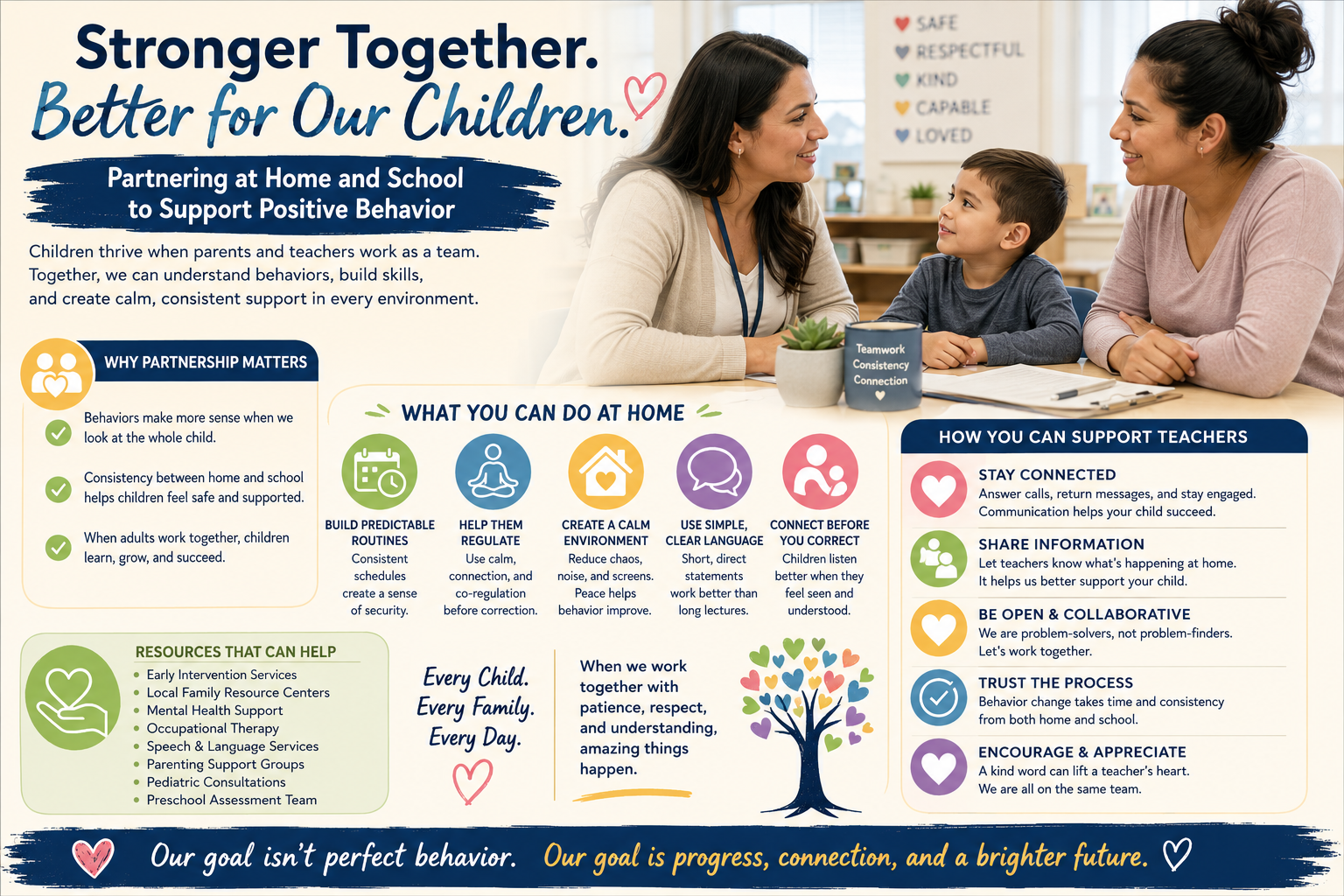
We Cannot Do This Alone: Why Parent and Teacher Partnership Matters During Challenging Behaviors
Parents and teachers are both overwhelmed by the intense behaviors many children are experiencing today,but children need connection, consistency, and teamwork more than blame. This blog explores how families can support children with challenging behaviors at home, strengthen communication with teachers, reduce emotional overload, and build healthier home-school partnerships that truly support the child.
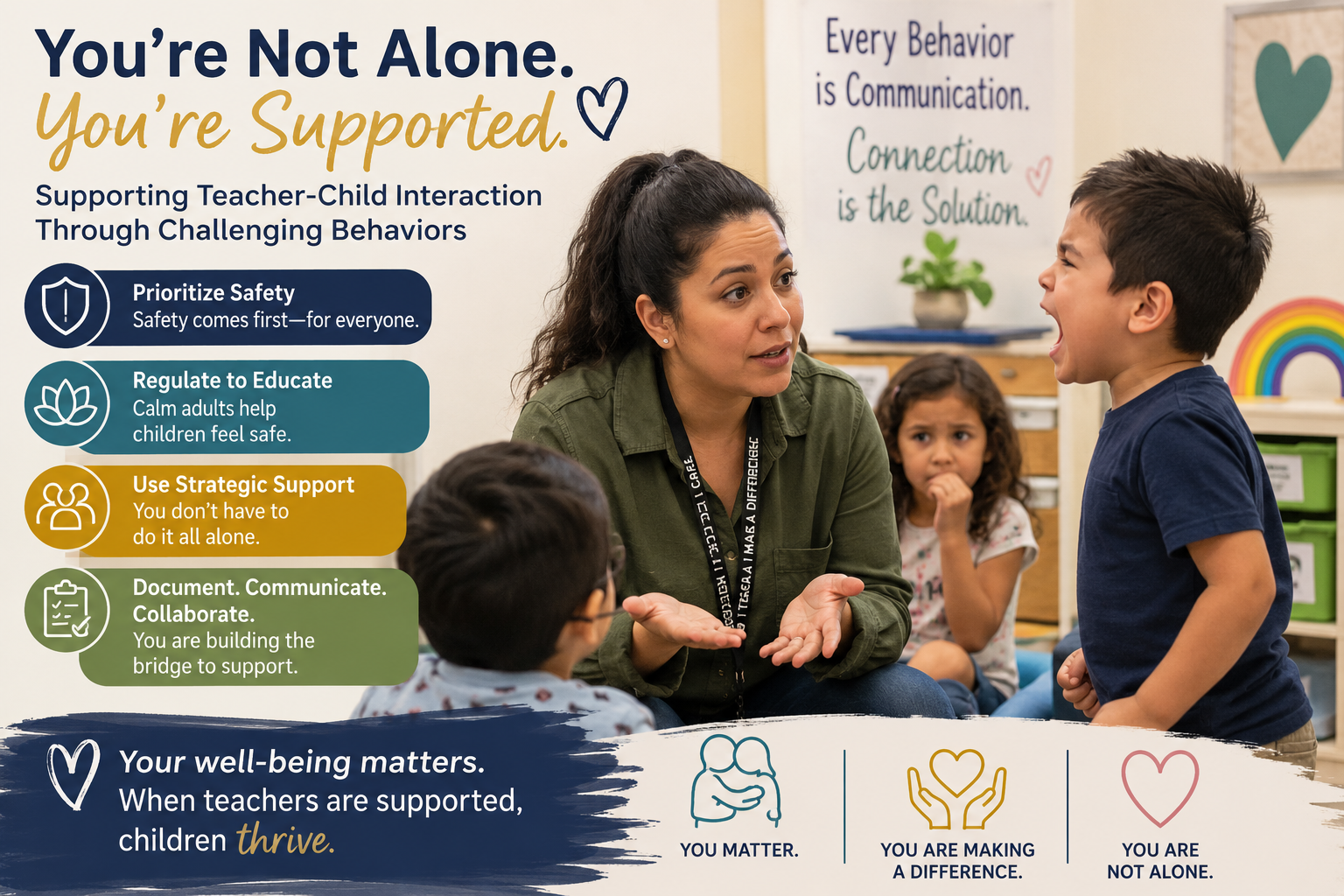
When the Classroom Feels Unsafe: Supporting Teachers Through Challenging Behaviors in Early Childhood Settings
Many early childhood teachers are navigating behaviors that go far beyond “typical classroom challenges.” From kicking, spitting, and running out of classrooms to emotional exhaustion and lack of administrative support, educators are carrying more than people realize. This blog explores realistic, strategic ways to support teacher-child interaction during severe behavioral moments while protecting both teacher well-being and classroom safety.
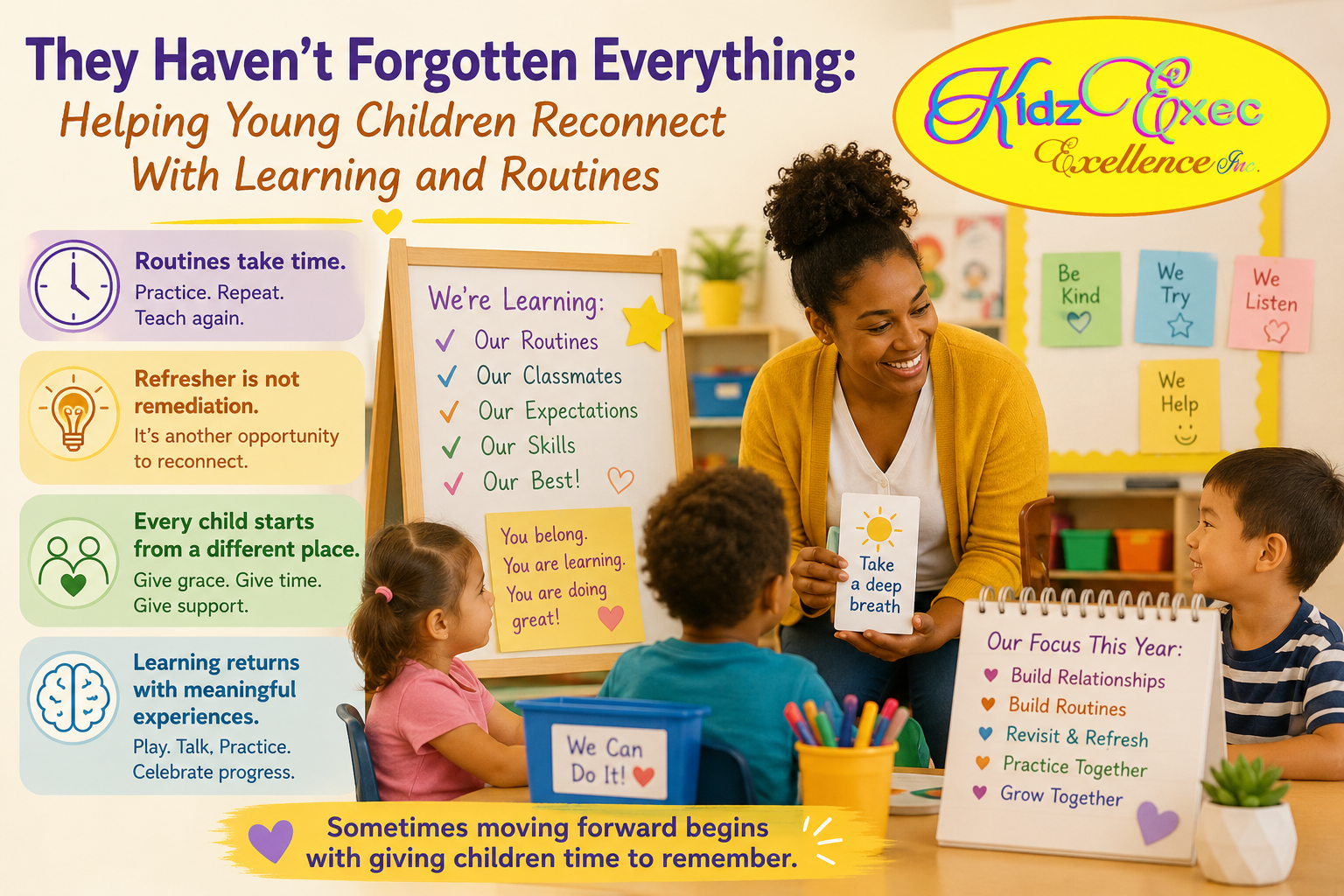
They Haven’t Forgotten Everything: Helping Young Children Reconnect With Learning and Routines
The first few weeks of school can feel like starting over. Children are adjusting to new routines, expectations, relationships, and academics all at once. When previously learned skills need refreshing, it doesn’t always mean the learning is gone. Sometimes children simply need time, practice, and meaningful opportunities to reconnect with what they already know.
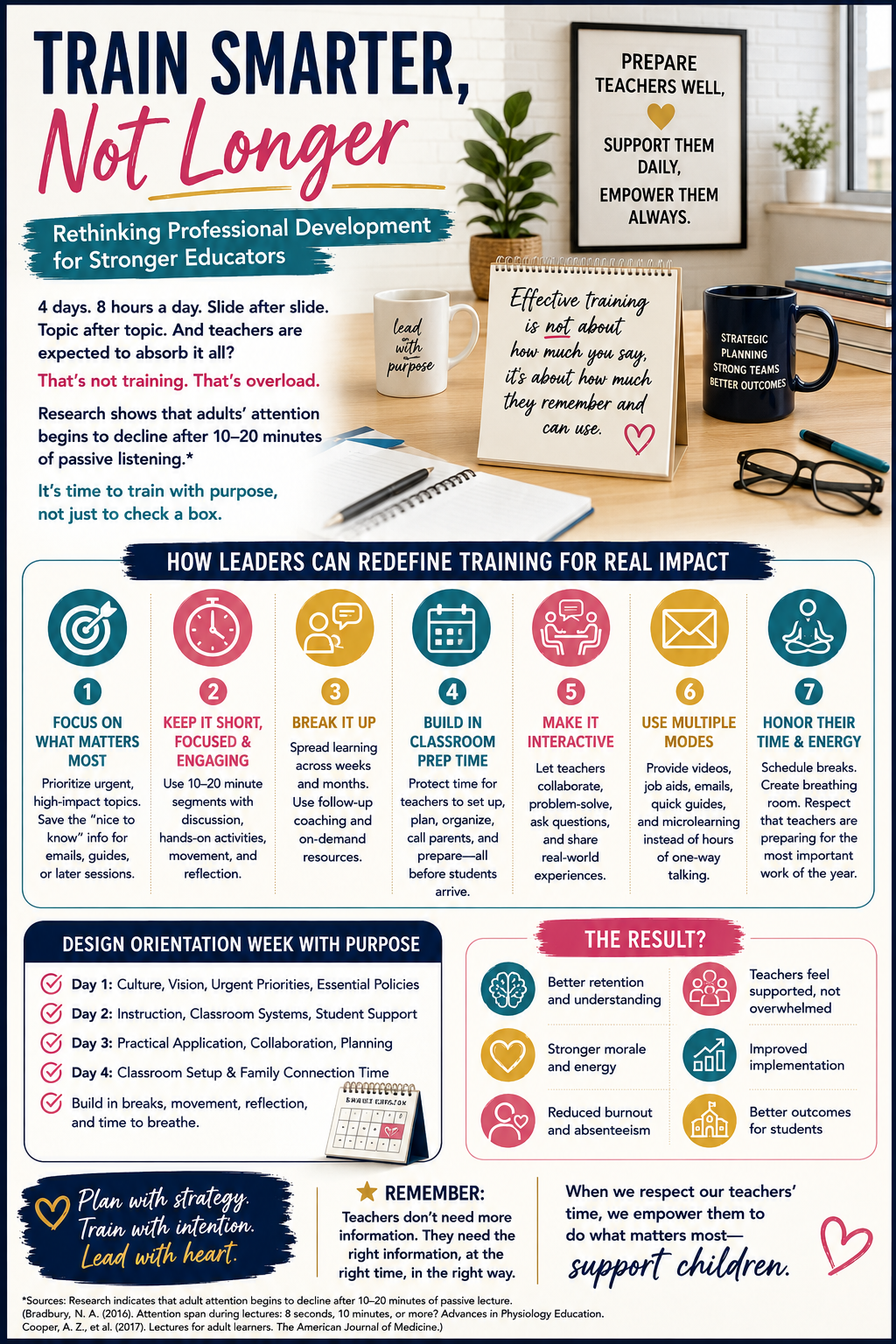
Stop Training Teachers to Exhaustion: Rethinking Back-to-School Professional Development
Back-to-school orientation weeks are often overloaded with nonstop trainings, long presentations, and unrealistic expectations for teachers already trying to prepare classrooms and reconnect with families. This blog challenges leaders to rethink professional development by creating shorter, more meaningful training experiences that improve retention, reduce overwhelm, and better support educators before the school year even begins.
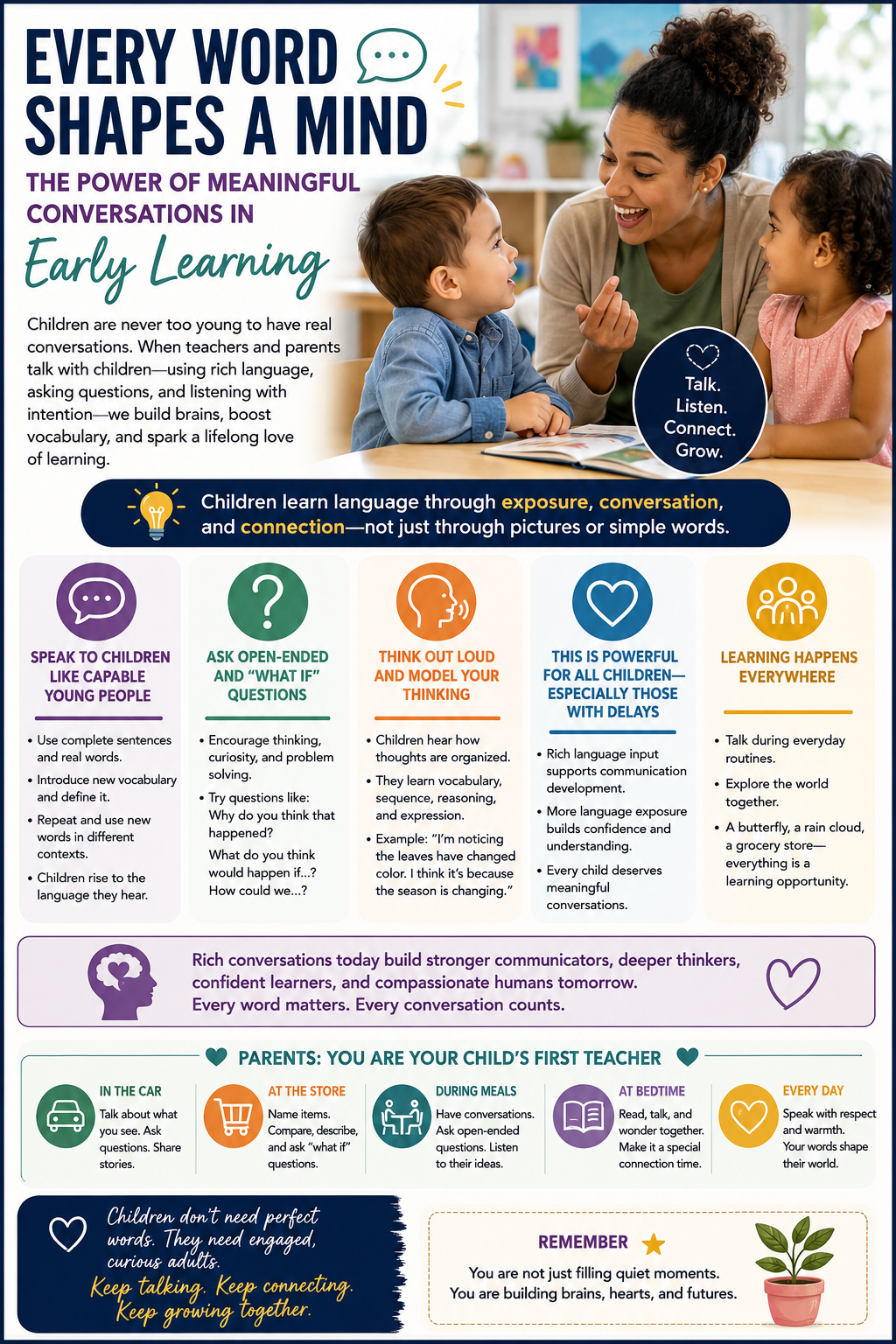
Children Learn Through Conversation: Why Talking Deeply With Young Children Matters More Than We Realize
Young children learn language, confidence, curiosity, and critical thinking through meaningful conversations with the adults around them. This blog explores why teachers and parents should speak to children using rich vocabulary, open-ended questions, and real conversations, even at a very young age, and how those everyday interactions help strengthen communication, comprehension, and early learning development.
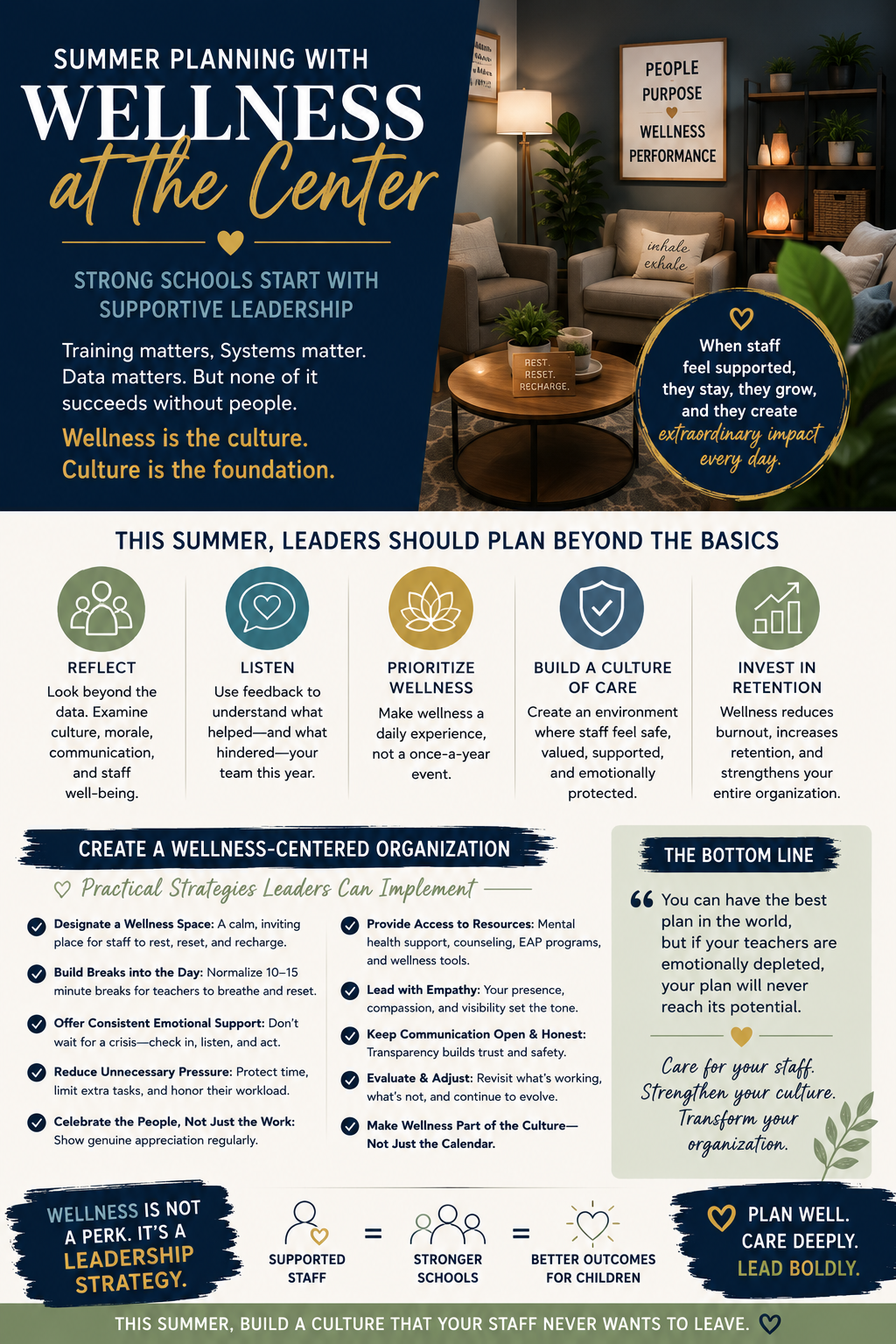
Summer Planning Should Include More Than Training: Why Educational Leaders Must Build Wellness Into Organizational Culture
Summer planning should involve more than trainings, data reviews, and classroom preparation. Educational leaders must also reflect on staff morale, organizational culture, burnout, and the emotional well-being of the people carrying the organization every day. This blog explores why sustainable wellness systems, meaningful leadership support, and emotionally safe work environments are essential for stronger schools, healthier staff, and better outcomes for children.

You Do Not Have to Earn Rest: Why Teachers Need to Recover During Summer Break
After a long and emotionally demanding school year, many teachers enter summer exhausted but still operating in “teacher mode.” This blog encourages educators to slow down, prioritize wellness, and intentionally recover during summer break so they can return refreshed, emotionally restored, and ready for a healthier new school year.
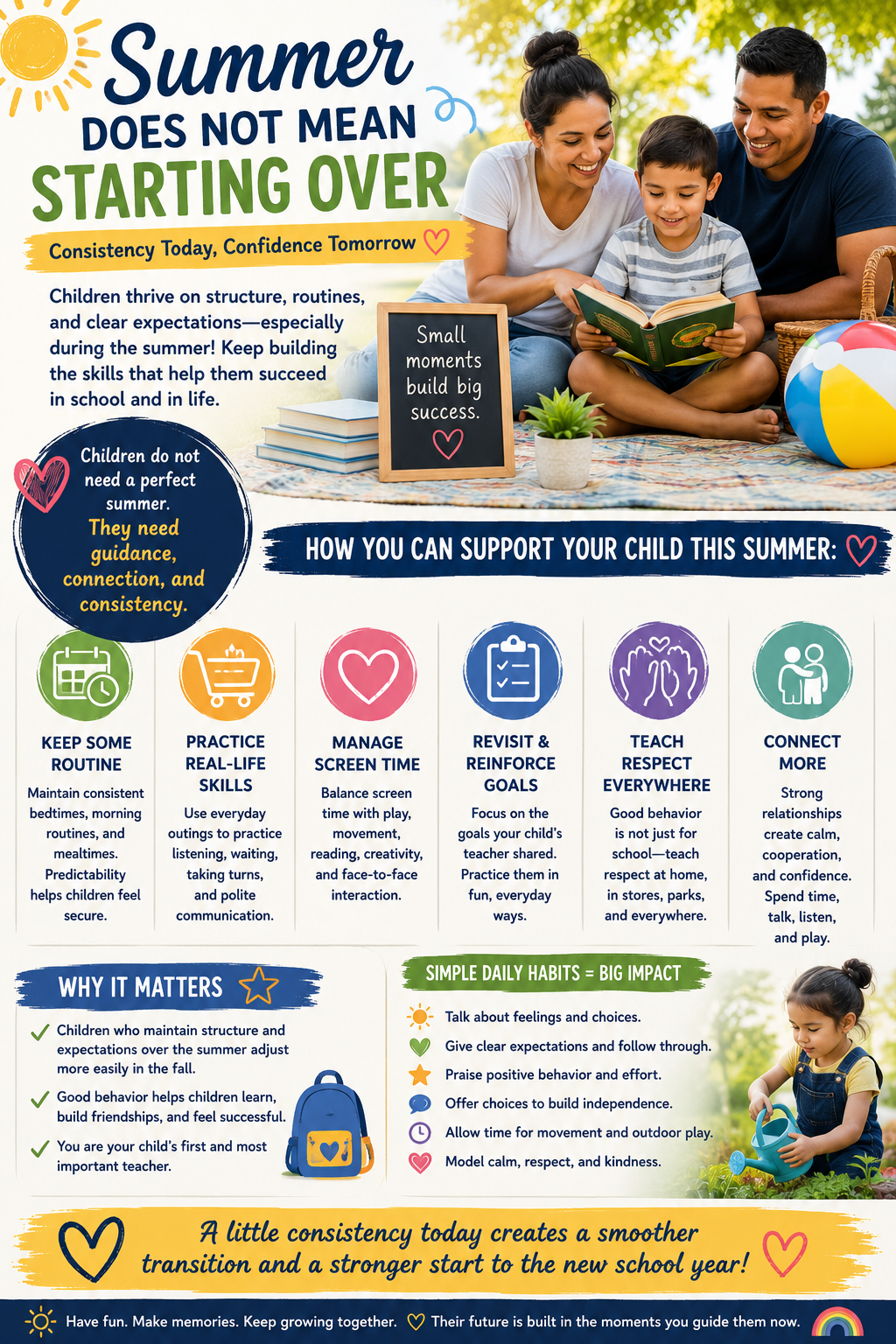
Summer Does Not Mean Starting Over: Why Children Still Need Structure During Breaks
Summer should be filled with fun, rest, and family memories, but it should not mean losing the routines, emotional support, and behavioral expectations children worked so hard to build during the school year. This blog helps families understand why maintaining structure, reinforcing positive behaviors, and practicing everyday life skills during summer can help children return to school more confident, emotionally prepared, and ready to learn.
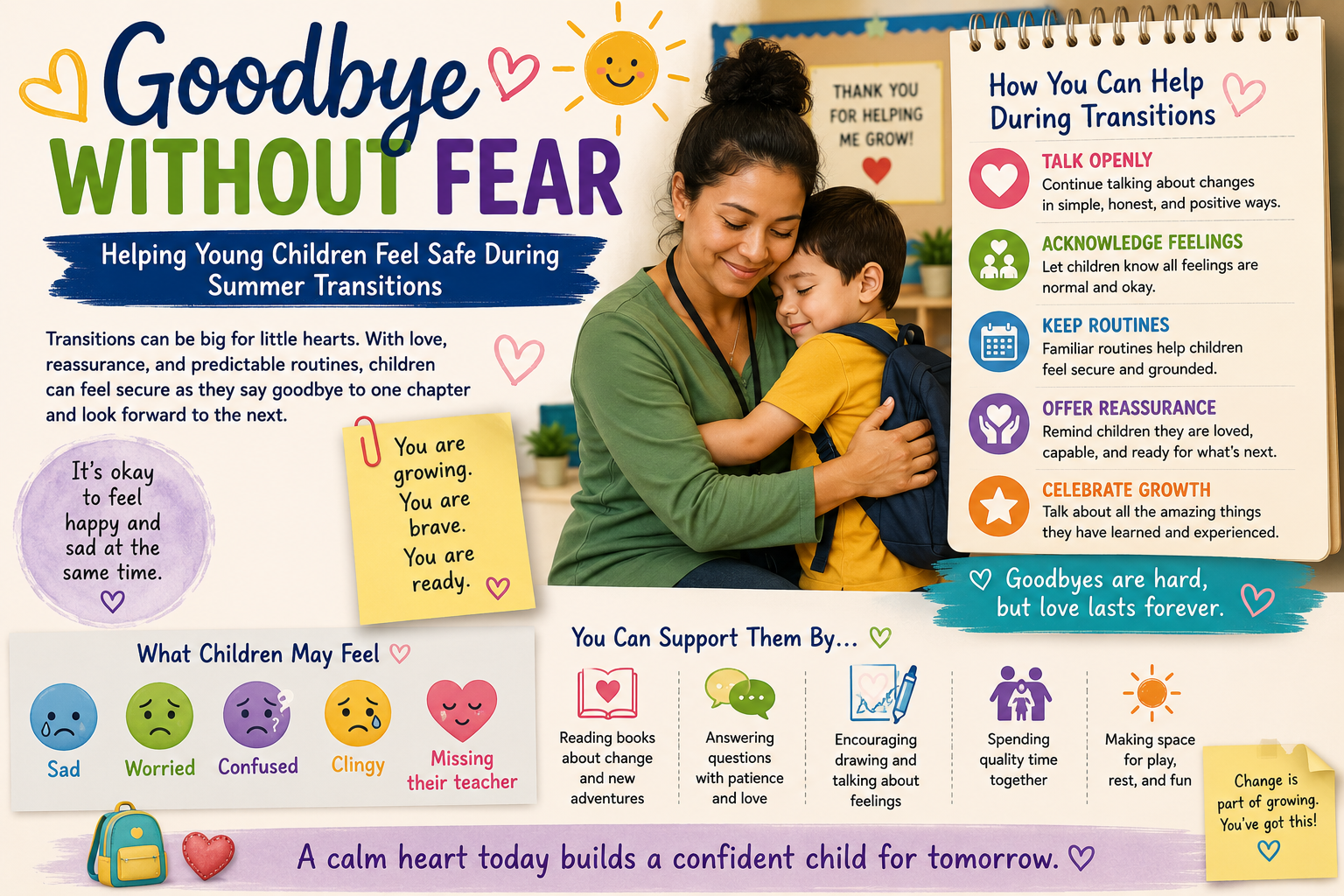
Helping Young Children Feel Safe During Summer Transitions
The end of the school year can bring big emotions for young children as they prepare to leave familiar teachers, routines, and classrooms behind. In this KidzExec Excellence blog, explore gentle ways teachers and families can support emotional safety, calm transitions, and meaningful goodbyes during the move into summer and new learning experiences.
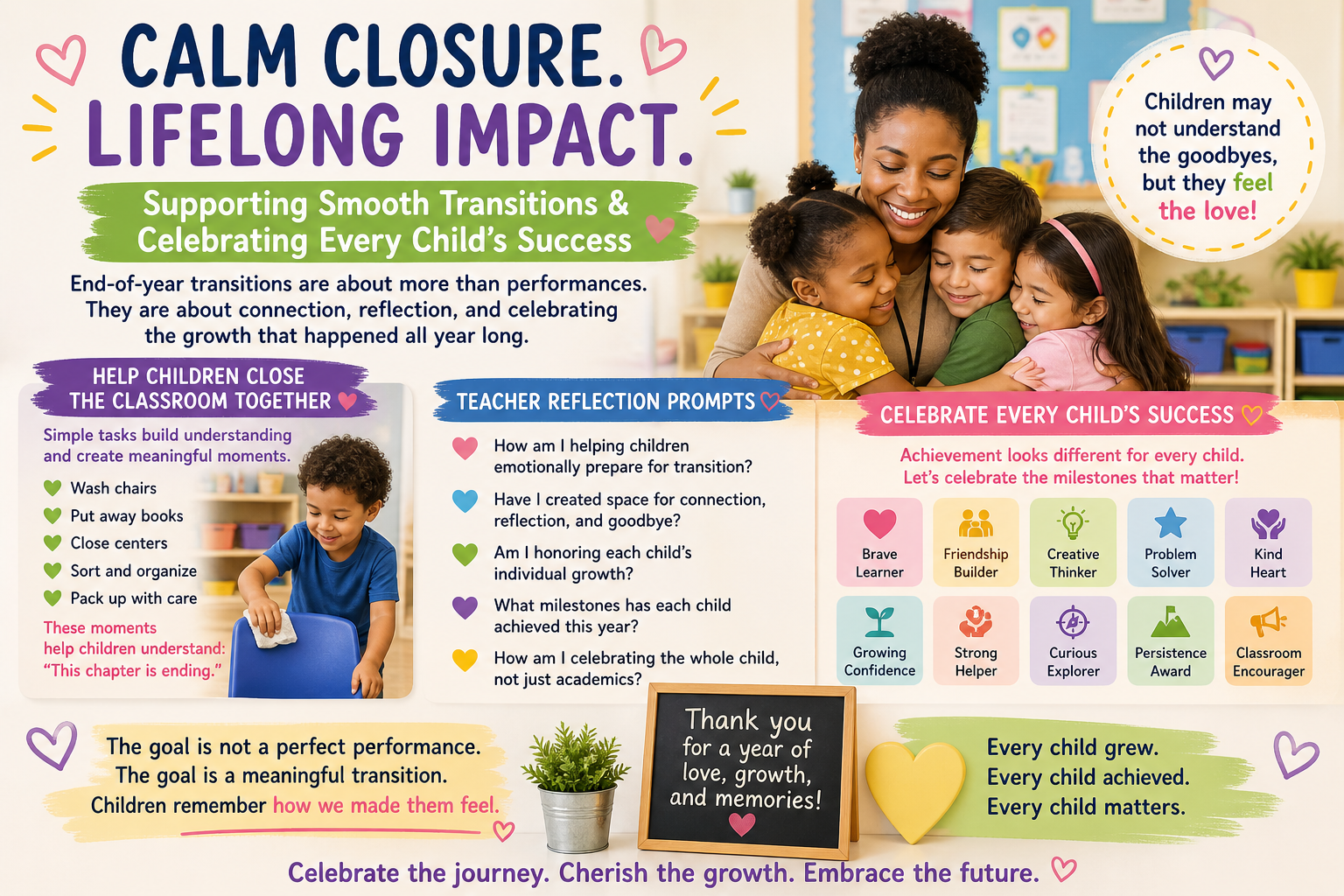
Celebrating Every Child’s Success During End-of-Year Transitions
End-of-year transitions in early childhood classrooms should be about more than performances and graduation programs. In this KidzExec Excellence blog, explore how teachers and families can support calm closure, emotional connection, and meaningful celebrations that honor each child’s unique developmental growth and achievements.
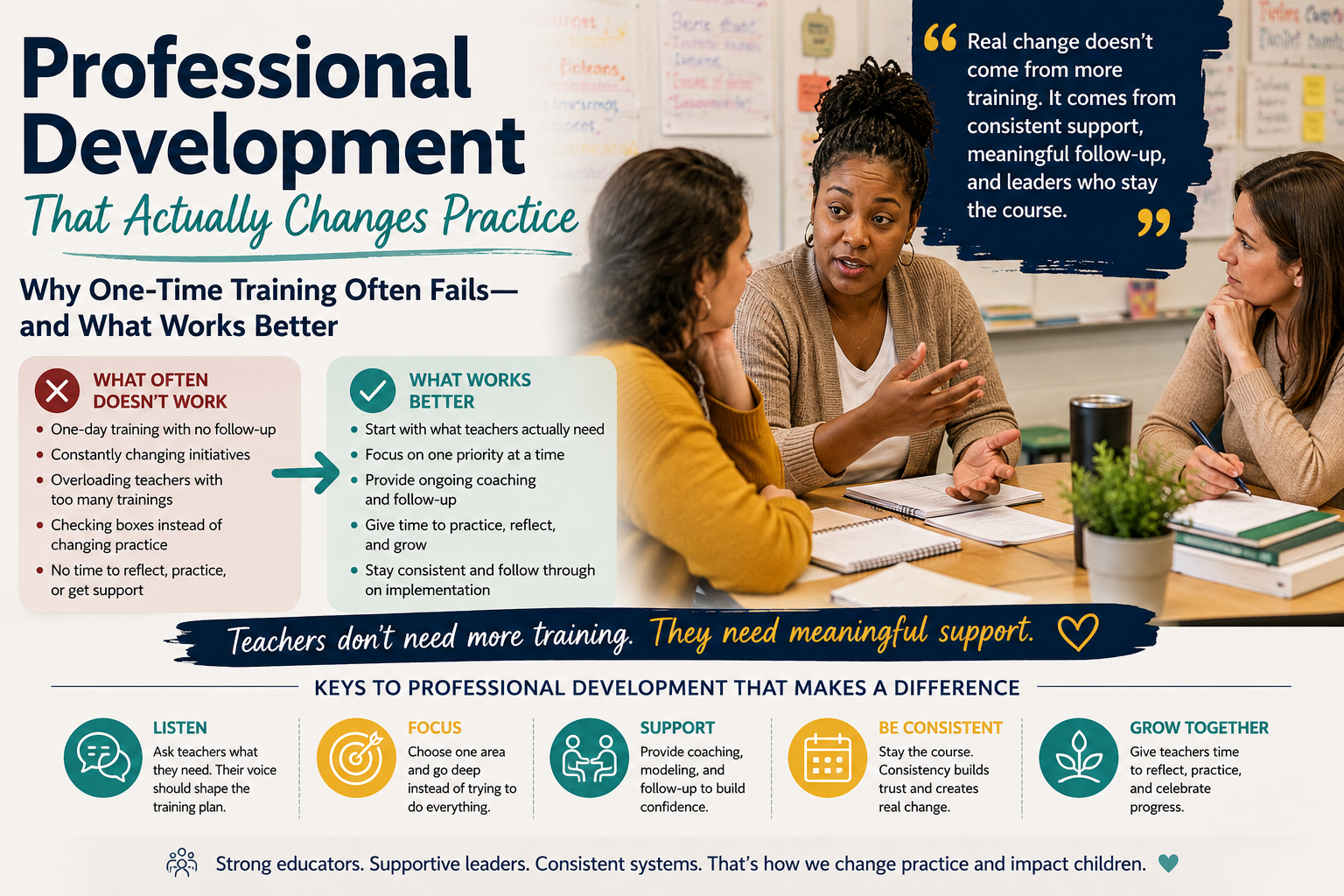
Professional Development That Actually Changes Practice
Professional development should strengthen educators, improve classroom quality, and create sustainable growth, not overwhelm teachers with endless trainings that lack follow-up and consistency. In this reflective leadership blog, we explore why one-time training often fails, how constant initiative changes impact educators, and what administrators can do to create meaningful professional development that truly changes classroom practice over time.
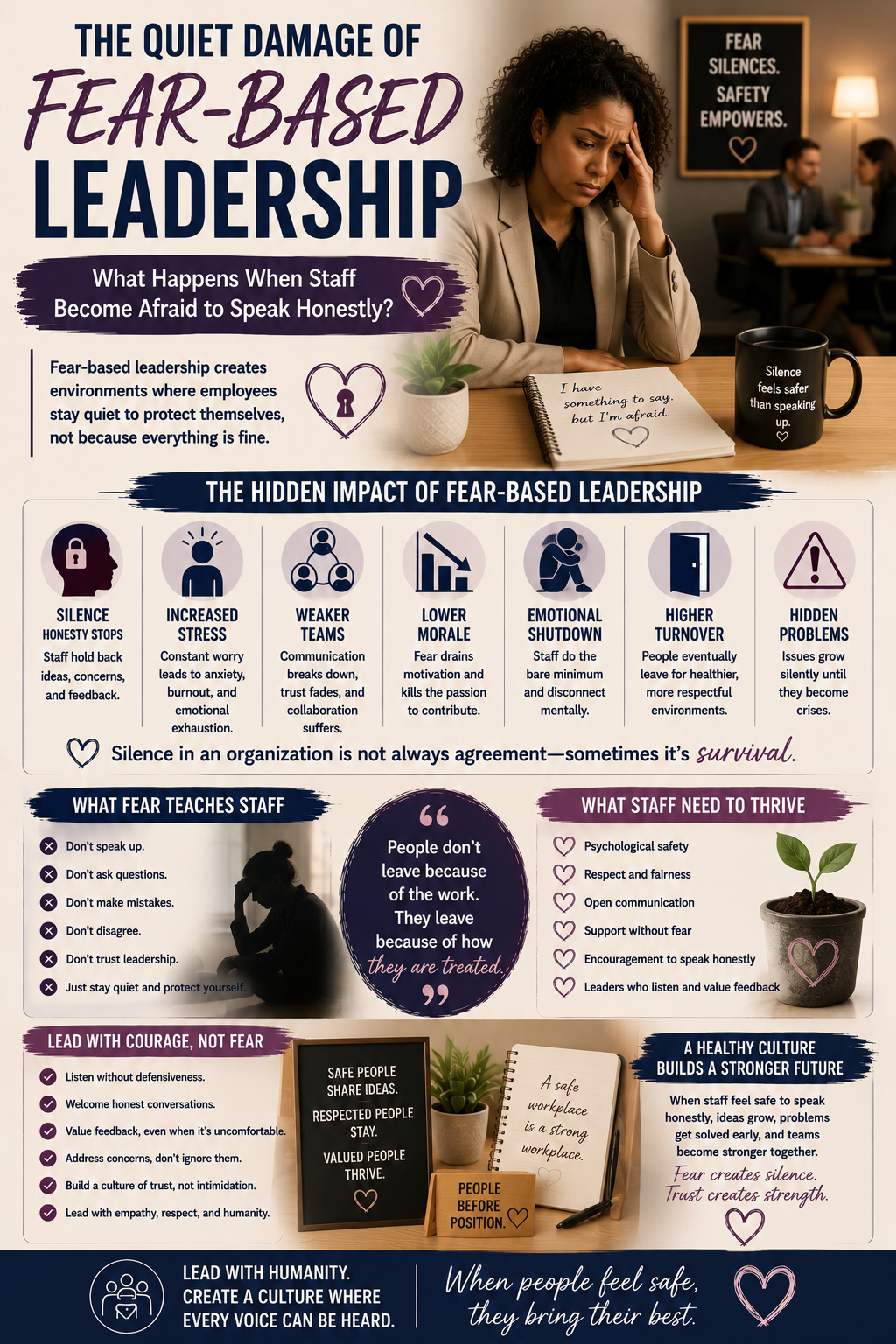
The Quiet Damage of Fear-Based Leadership
Fear-based leadership often creates quiet workplaces where employees stop speaking honestly, asking questions, or expressing concerns, not because everything is healthy, but because emotional safety no longer exists. In this reflective leadership blog, we explore how fear-driven workplace culture damages trust, communication, morale, collaboration, and emotional wellness, while highlighting the importance of psychological safety and emotionally supportive leadership.
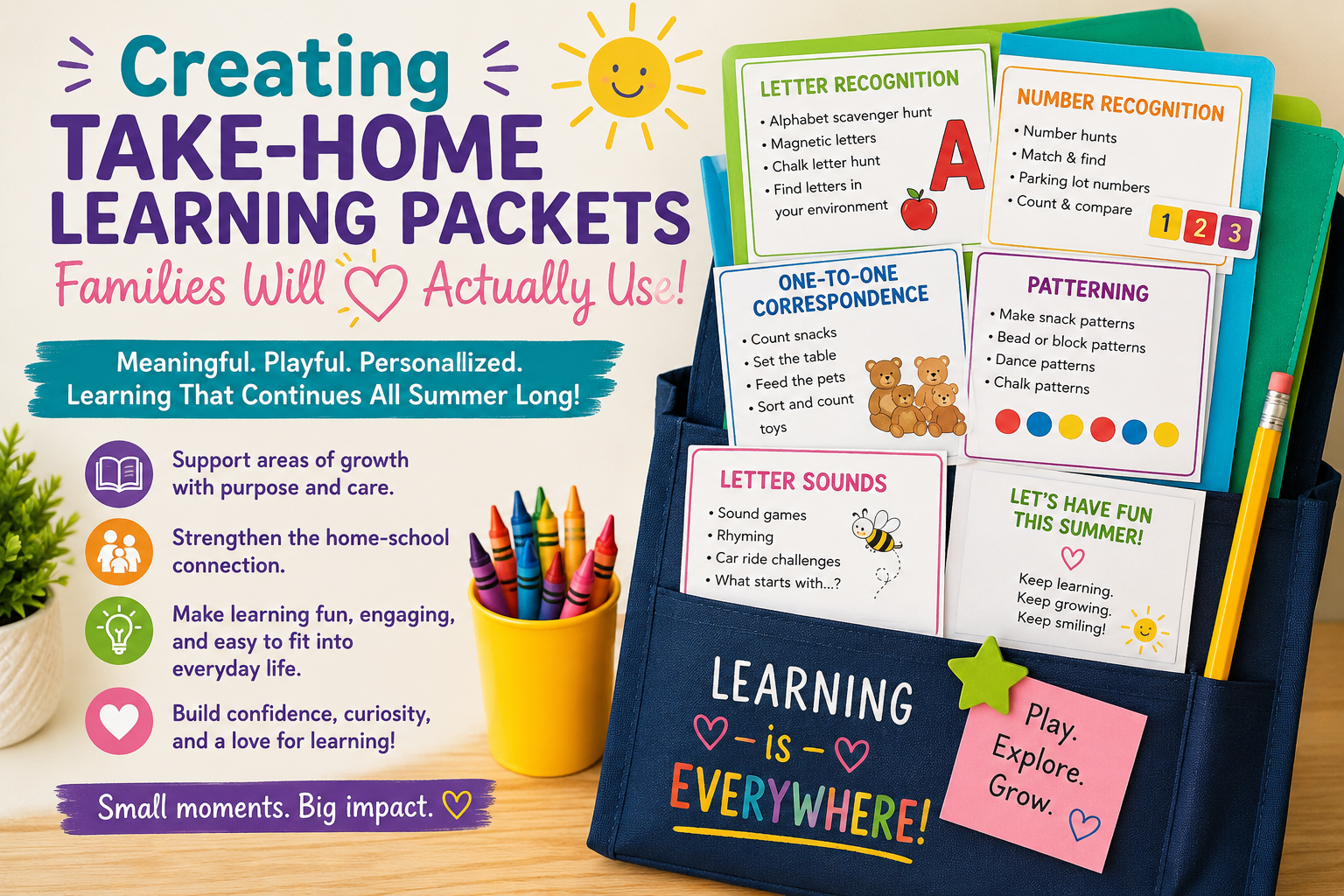
Creating Take-Home Learning Packets Families Will Actually Use
As the school year comes to a close, take-home learning packets can become meaningful tools that support continued growth without overwhelming families. In this KidzExec Excellence blog, discover how teachers can create playful, personalized summer learning activities that help children strengthen important developmental skills through everyday experiences, movement, creativity, and family connection.
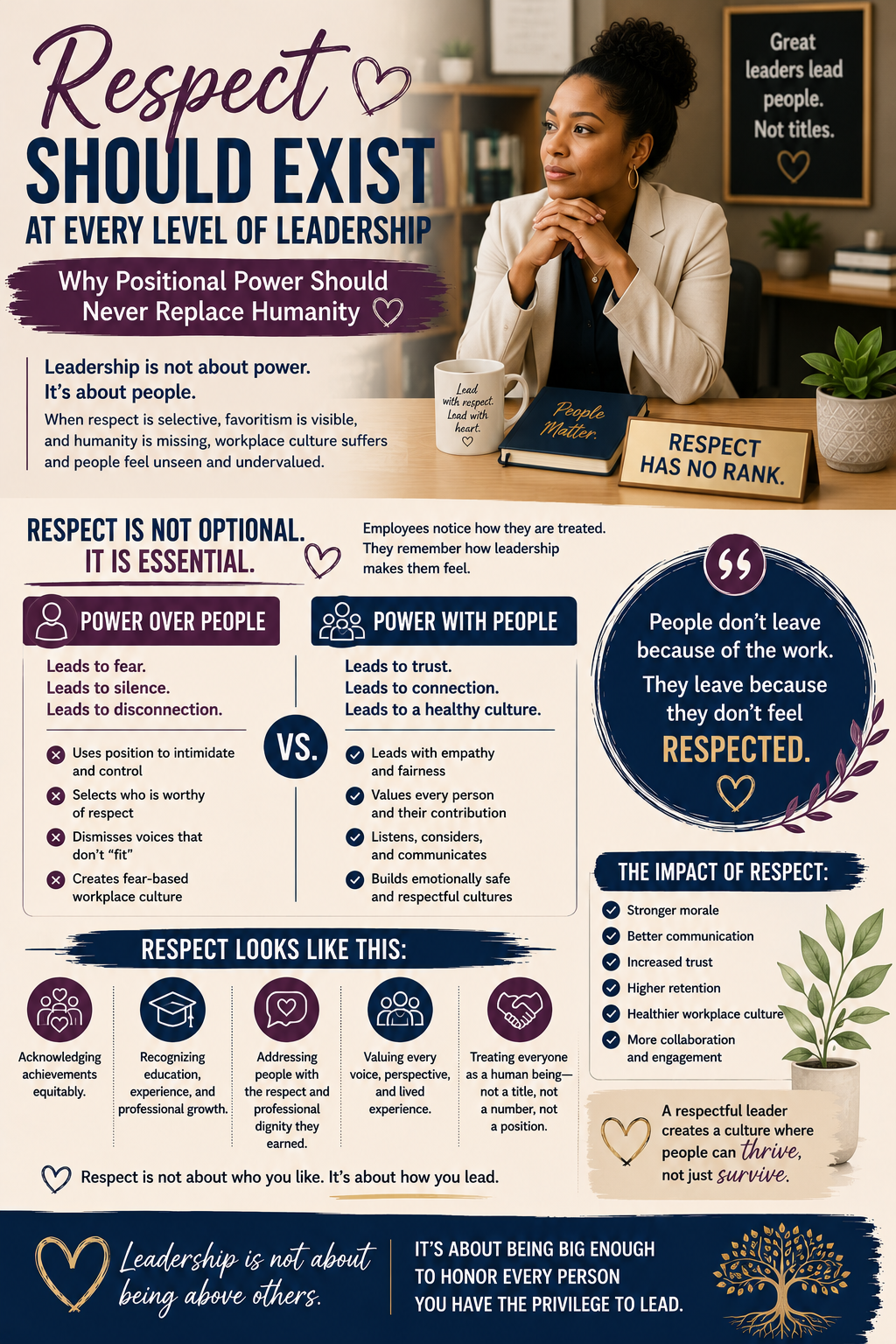
Respect Should Exist at Every Level of Leadership
Respect in leadership should never be selective or based on position, favoritism, race, or power. In this reflective leadership blog, we explore how emotionally disconnected leadership, unequal treatment, and fear-based workplace culture damage trust, morale, emotional safety, and workplace relationships — and why true leadership must always remain grounded in humanity, fairness, dignity, and respect for every employee.
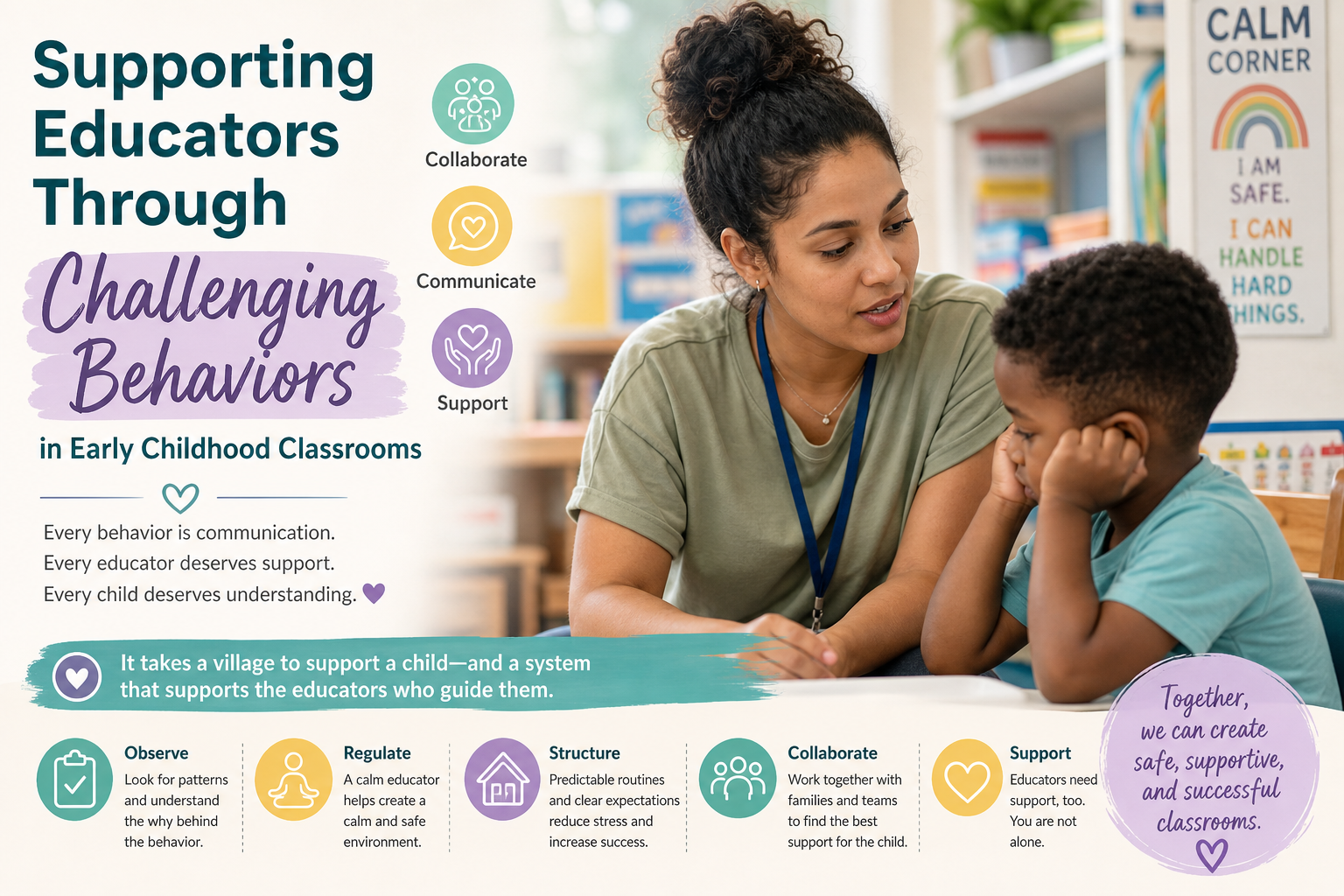
Supporting children with challenging behaviors in early childhood classrooms requires more than quick fixes or temporary solutions. It requires collaboration, consistency, emotional awareness, and strong educator support systems. In this reflective professional development blog, we explore practical strategies educators and leaders can use to better understand behavior, support classroom regulation, partner with families, and build collaborative intervention teams that help both children and teachers thrive.
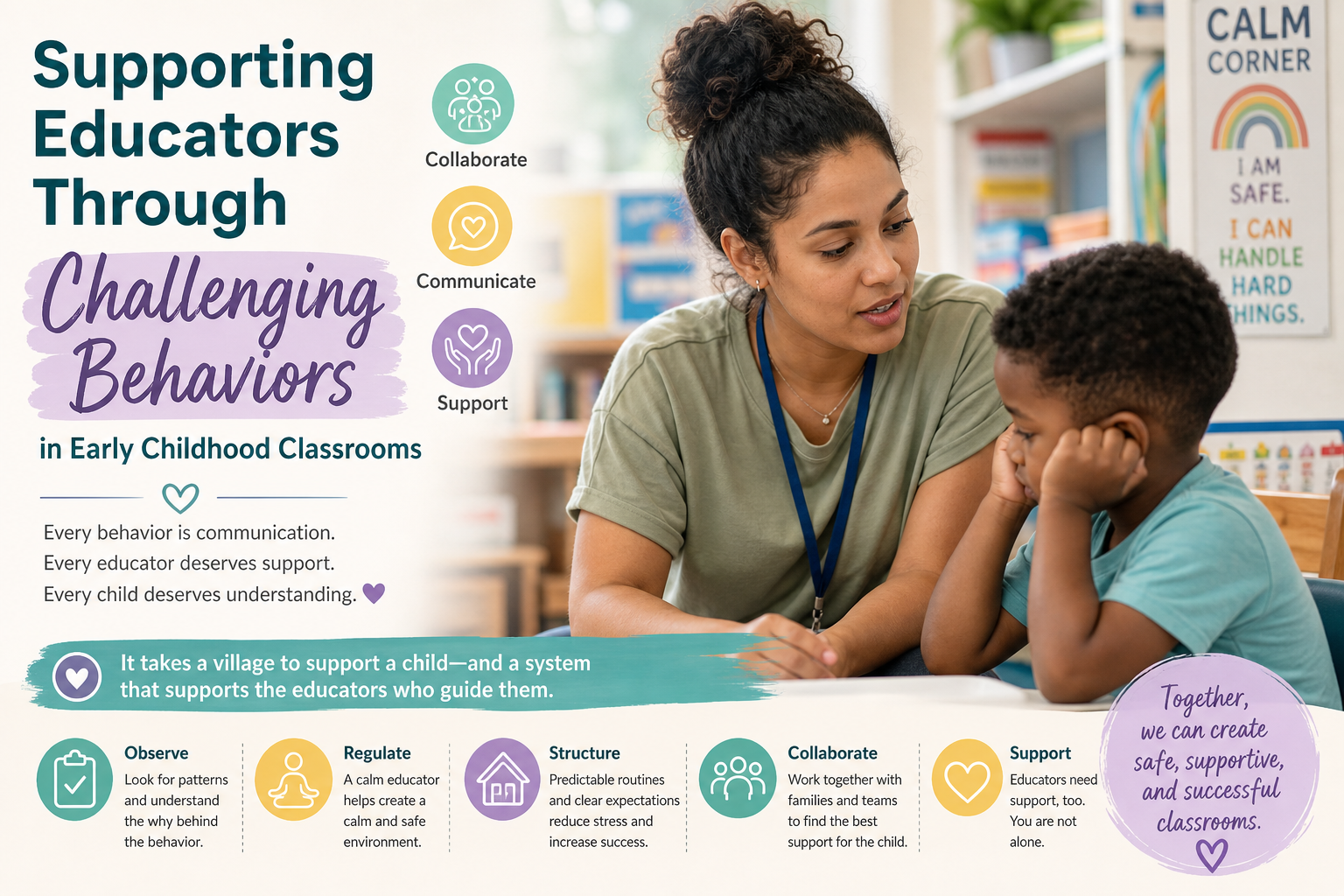
Supporting Educators Through Challenging Behaviors in Early Childhood Classrooms
Supporting children with challenging behaviors in early childhood classrooms requires more than quick fixes or temporary solutions. It requires collaboration, consistency, emotional awareness, and strong educator support systems. In this reflective professional development blog, we explore practical strategies educators and leaders can use to better understand behavior, support classroom regulation, partner with families, and build collaborative intervention teams that help both children and teachers thrive.
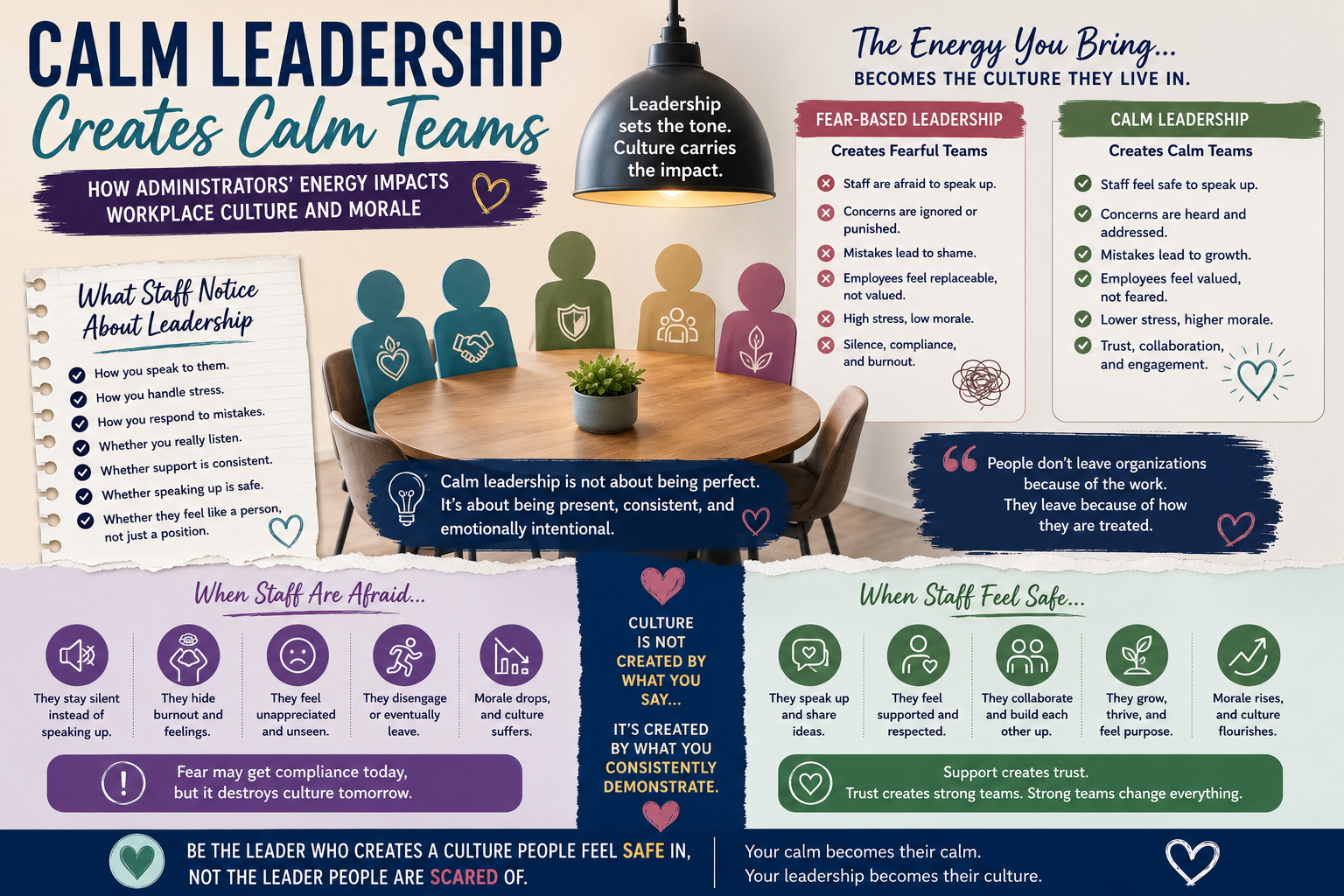
Calm Leadership Creates Calm Teams
The emotional energy of leadership shapes workplace culture far more than many organizations realize. In this reflective wellness and calm blog, we explore how fear-based leadership creates silence, burnout, anxiety, and emotional disconnection among staff, while calm, emotionally aware leadership builds trust, psychological safety, morale, and healthier workplace relationships that support both educators and children.
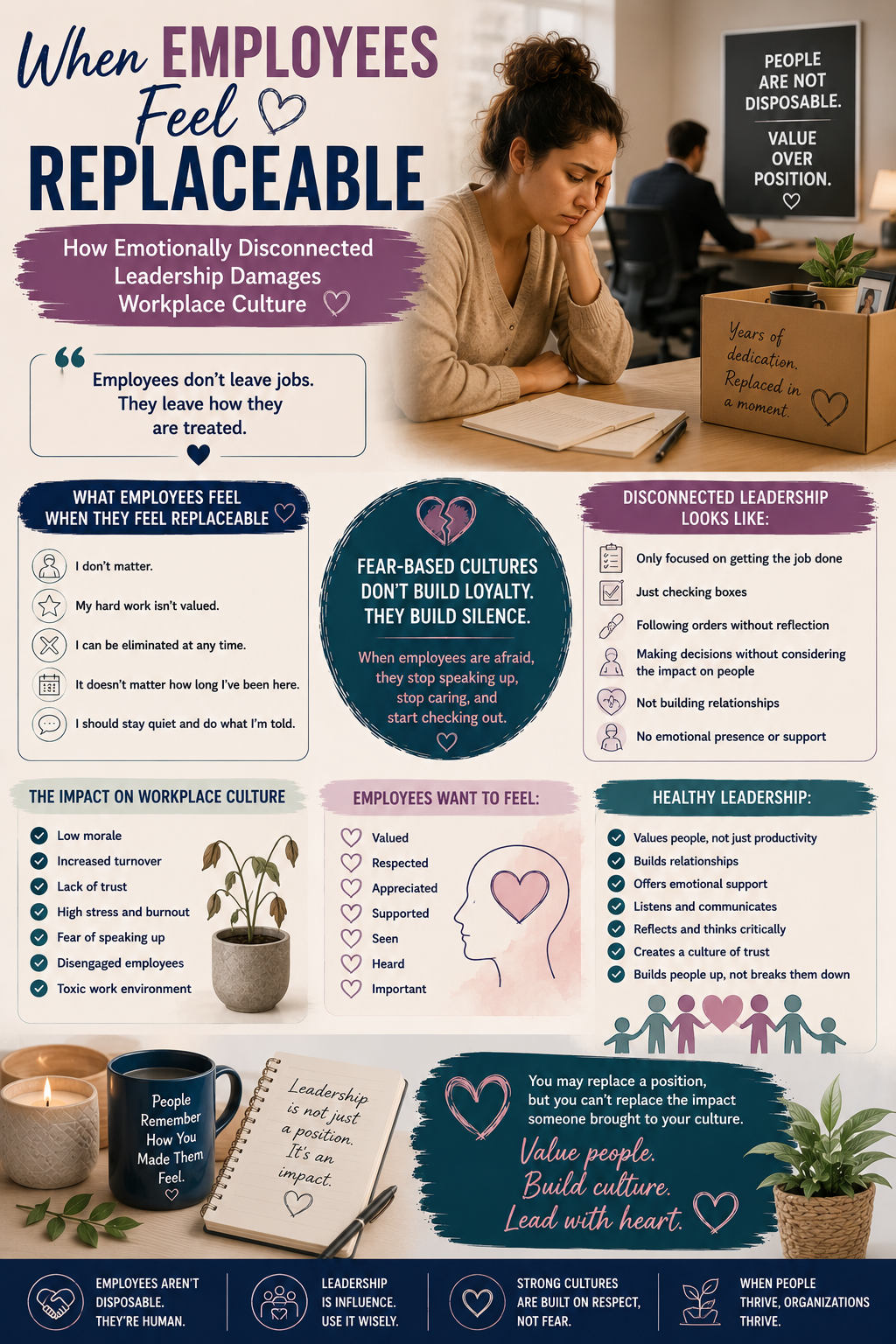
When Employees Feel Replaceable
Employees thrive in workplaces where they feel valued, respected, emotionally safe, and connected to leadership. In this reflective leadership blog, we explore how emotionally disconnected leadership, fear-based workplace culture, and treating employees as replaceable can damage morale, trust, emotional safety, and long-term workplace sustainability in educational environments.
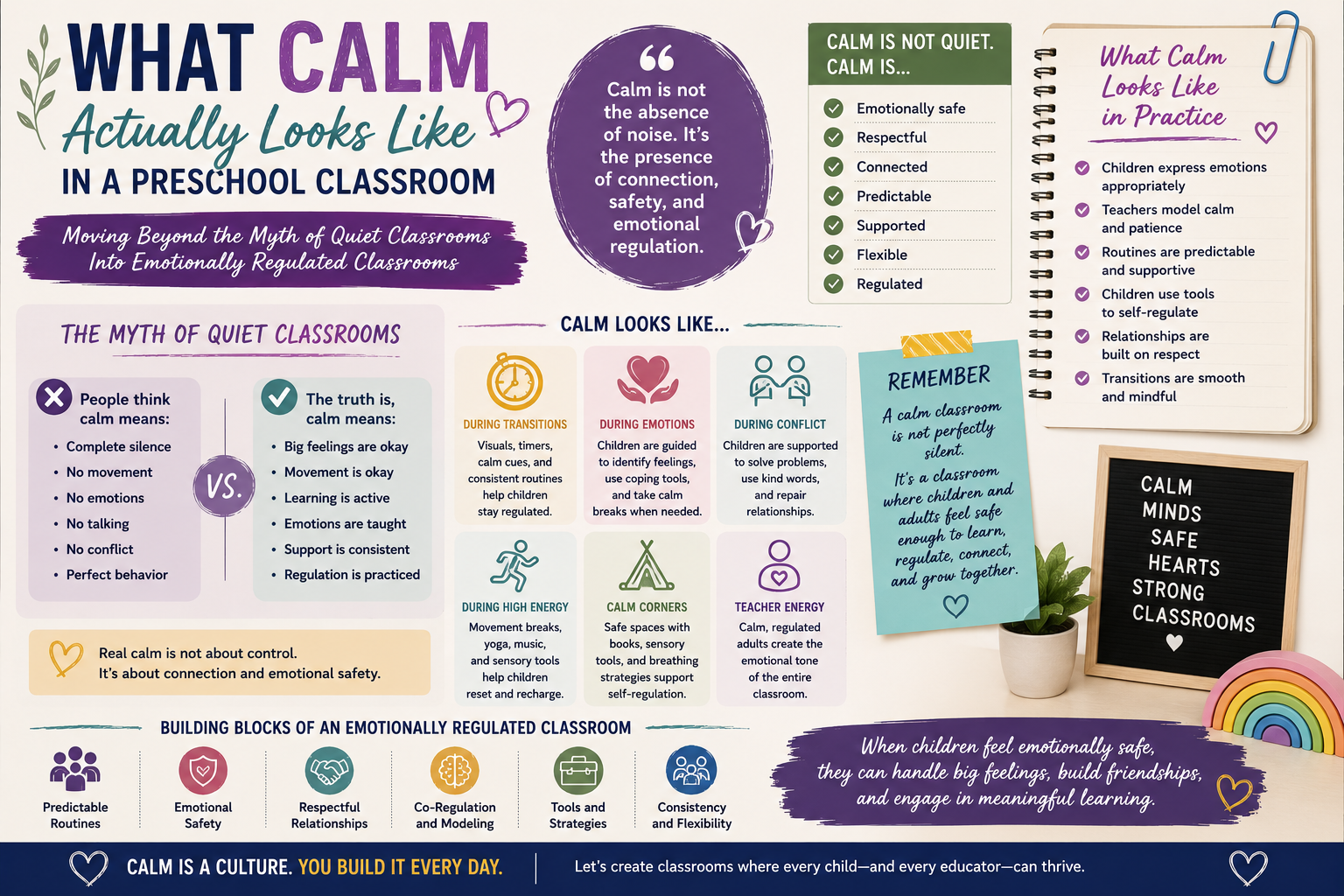
What Calm Actually Looks Like in a Preschool Classroom
Many people assume a calm preschool classroom means complete silence, but emotionally regulated classrooms look very different. In this reflective wellness and calm blog, we explore what calm actually looks like in early childhood environments through emotional safety, respectful communication, predictable routines, co-regulation, calm corners, and healthy teacher-child interactions that support emotional growth rather than control through silence.
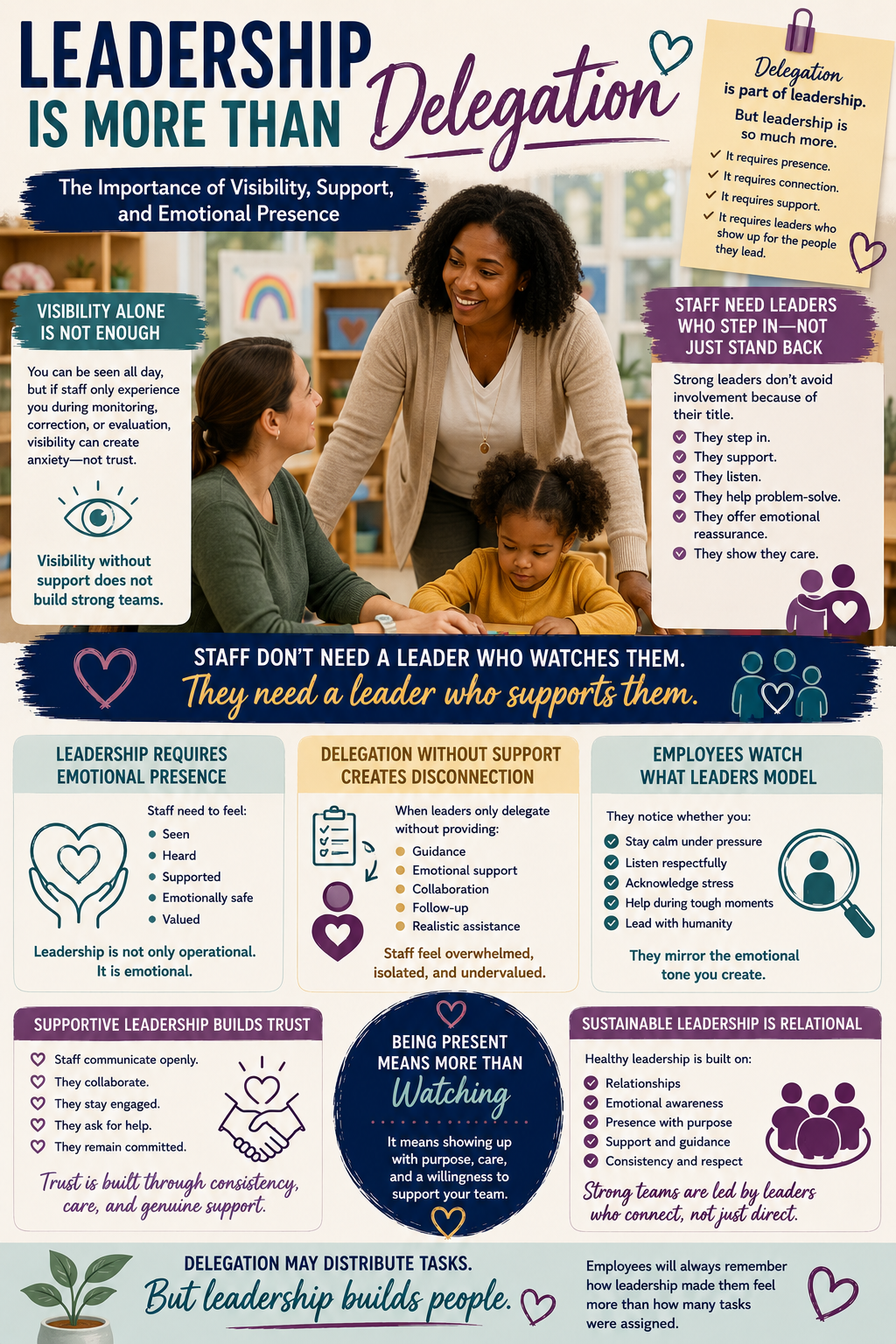
Leadership Is More Than Delegation
Leadership in education is about far more than assigning tasks and monitoring performance. In this reflective leadership blog, we explore how intentional visibility, emotional presence, support, and relational leadership create stronger workplace culture, healthier teams, and emotionally safe environments where educators feel valued rather than simply managed.